Welcome to the latest update of our "Taste of the World: Traditional Foods" collection! We are thrilled to introduce a brand-new batch of coloring pages featuring a delectable mix of sweet treats and savory baked goods. Whether you are a teacher planning a cultural geography lesson or a parent looking for a fun afternoon activity, these new pages offer a fantastic way to explore global bakery traditions.
To help your young artists get the most out of these new additions, we have put together a guide on how to bring out the unique textures of crumbly crusts, shiny syrups, and twisted doughs using simple coloring techniques.
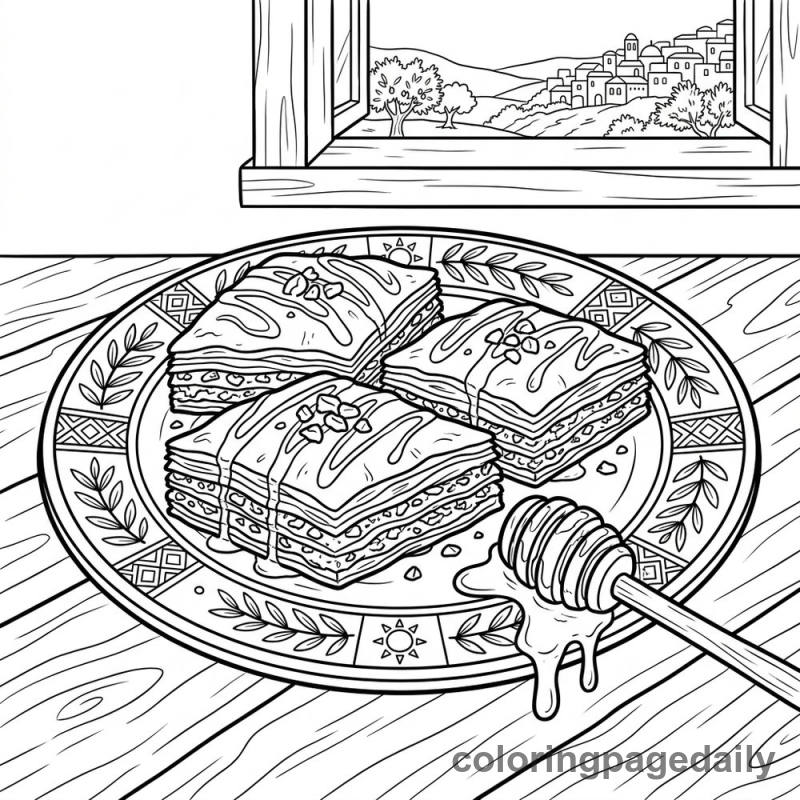
Our new Greek Baklava page is a wonderful opportunity to practice coloring shiny surfaces. Baklava is a rich, sweet pastry made of layers of paper-thin phyllo dough, filled with chopped nuts, and sweetened with syrup or honey.
Coloring Tip: To create a sticky, syrupy look, have kids use a combination of golden yellow and light brown crayons. The trick is to leave a small, curved line completely uncolored (white) on the top of the pastry and the honey dipper. This creates a "highlight" that makes the honey look glossy and wet!
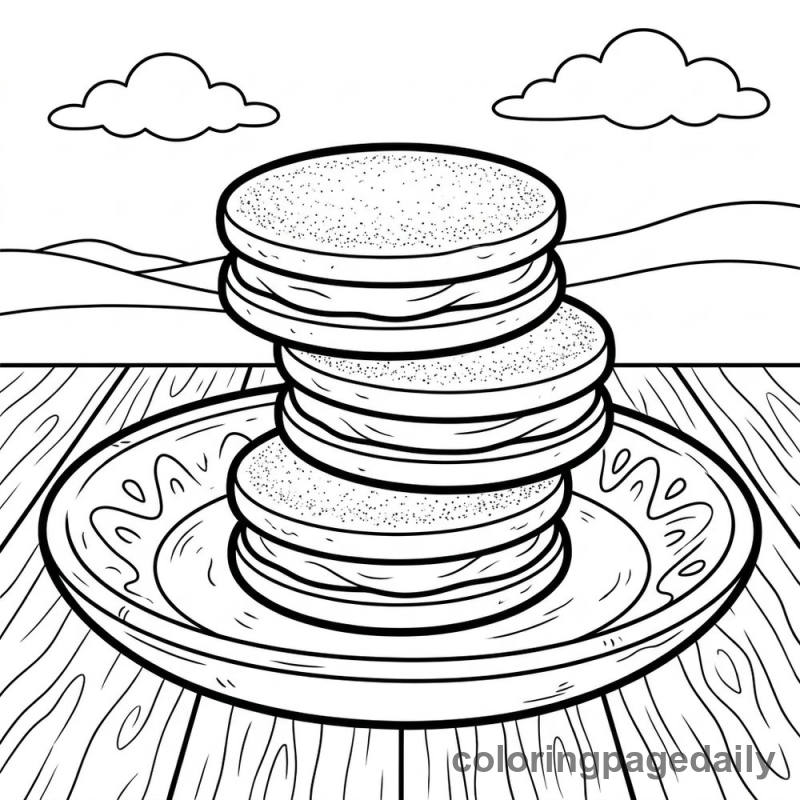
Next up, we are traveling to South America with Argentine Alfajores. These beloved sandwich cookies are traditionally filled with creamy dulce de leche (a caramel-like sweet) and often have their edges rolled in shredded coconut.
Coloring Tip: To make the cookies look crumbly and realistic, introduce children to a technique called "stippling." Instead of coloring with broad, flat strokes, they can gently tap the tip of a tan or light brown colored pencil against the paper to create tiny dots. This perfectly mimics the porous, sandy texture of shortbread cookies.
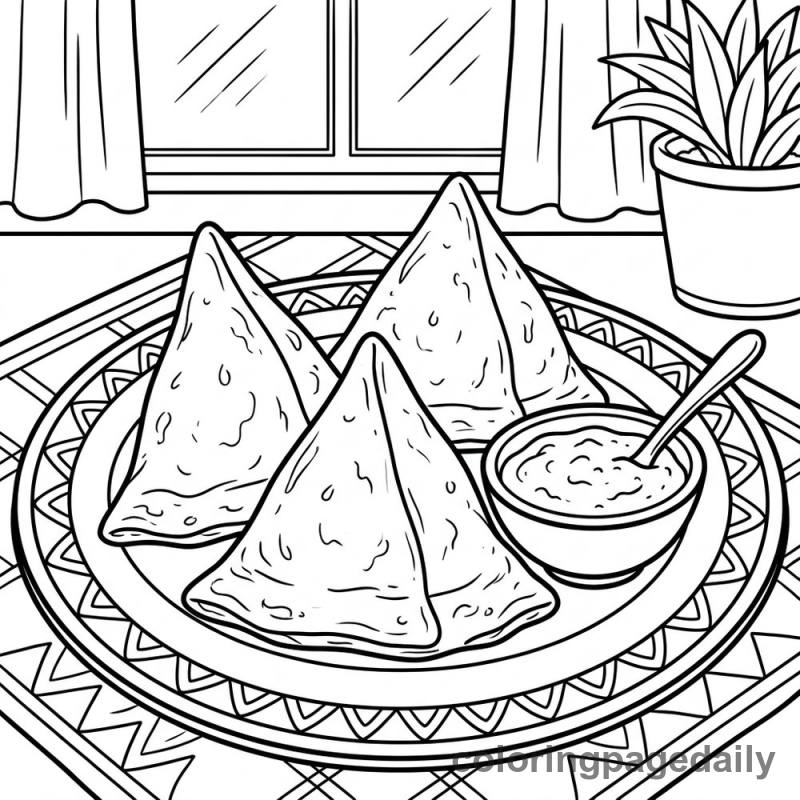
Our collection wouldn't be complete without the iconic Indian Samosa! While samosas are a staple of Indian cuisine today, you can share a fun historical fact with your students: these delightful, savory pastries actually have ancient origins in the Middle East before traveling along trade routes to India.
Coloring Tip: Samosas are known for their crispy, blistered crusts. Kids can achieve a "fried" or "baked" golden look by lightly layering yellow first, then gently blending a warm orange or light brown over the top, focusing on the edges. For the accompanying mint-cilantro chutney, a bright, vibrant green will provide a beautiful color contrast on the page.
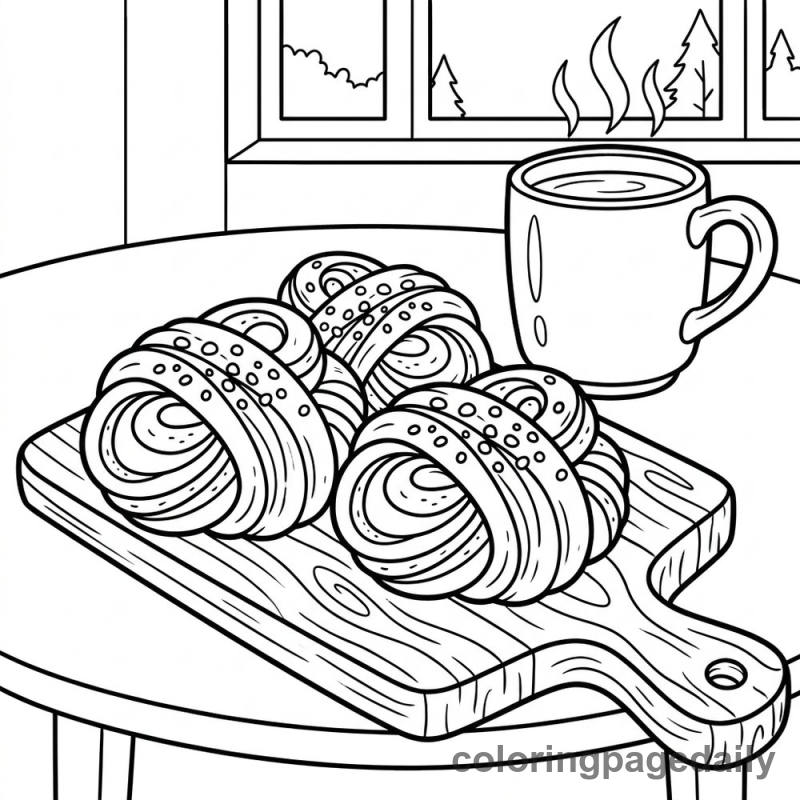
Finally, we are heading to Scandinavia with Swedish Cinnamon Knot Buns (Kanelbullar). In Sweden, taking a daily break with a cup of coffee or tea and a sweet treat is a cherished cultural tradition known as fika.
Coloring Tip: These buns are famous for their beautiful, twisted shapes. To emphasize the depth of the folds, encourage young artists to trace the inner lines of the dough twists with a darker brown colored pencil or crayon. This simple shading technique makes the 2D drawing pop off the page, giving the buns a plump, 3-dimensional appearance.
We hope you and your little ones enjoy coloring your way through these delicious new global additions. Grab your crayons, and happy coloring!
This article is part of Taste of the World: Traditional Foods — browse all 23 coloring pages
