Summer vacation is the perfect time to relax and unwind, but that doesn't mean the learning has to stop! Our Sunny Summer Vacation Vol. 2 collection combines magical beach scenes and playful ocean animals with the perfect opportunity to share educational facts with your children or students.
While your little artists are busy choosing the perfect crayons and markers, you can sneak in some incredible science and biology lessons disguised as casual conversation. Let's dive into some fun facts inspired by our latest coloring pages!
Kids love octopuses, and for good reason! Did you know that an octopus has an incredibly unique nervous system? They actually have nine brains—one central brain and a mini-brain in each of their eight arms. This allows their arms to move, explore, and react independently. Furthermore, they can "taste" what they touch using the hundreds of suction cups lining their arms!
Squids are famous for their ink, making them the original artists of the deep sea. When threatened, squids release a cloud of dark ink to confuse predators and make a quick escape. While they might look somewhat similar to octopuses, squids actually have ten appendages: eight arms and two extra-long tentacles that they use specifically for catching their food.
Finding seashells is a classic summer beach activity. The beautiful shells you find washed up on the shore were once the protective homes of soft-bodied animals called mollusks. Scallops (bivalves with two hinged shells) are completely unique because they can actually swim! By rapidly clapping their shells together, they shoot jets of water out the back, propelling themselves safely away from predators.

Seahorses are truly unique fish. Unlike most fish that swim horizontally, seahorses swim upright! Because they are not very strong swimmers, they use their prehensile tails—much like a monkey's tail—to anchor themselves to coral branches or seagrass so they aren't swept away by ocean currents. They are also famous in the animal kingdom because the male seahorse is the one who carries the eggs and gives birth to the babies!
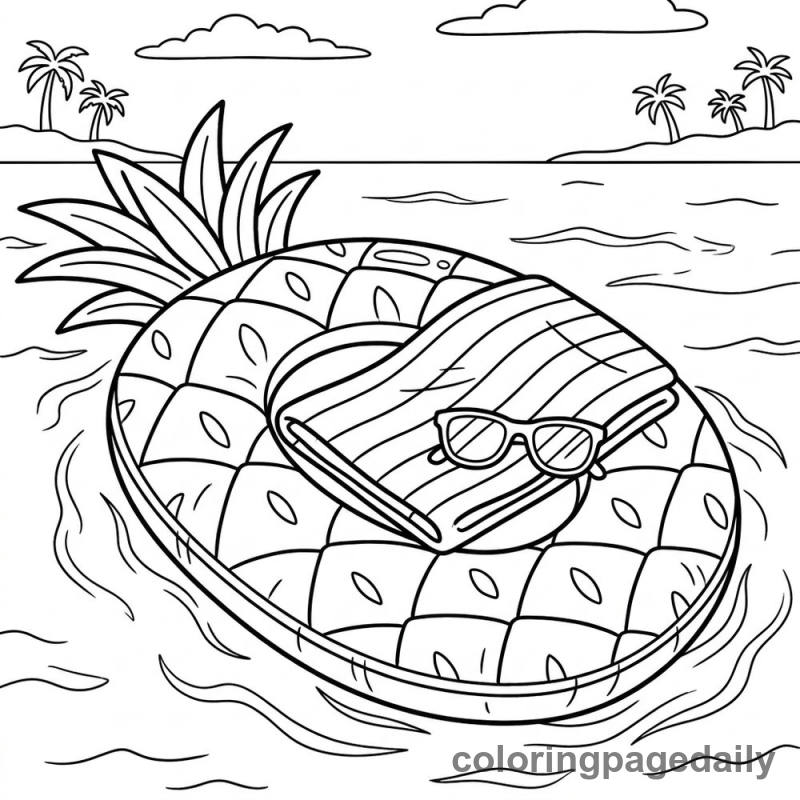
Nothing says summer quite like a sweet, juicy pineapple! However, biologically speaking, a pineapple is not a single fruit. It is actually a "multiple fruit," meaning it consists of dozens of individual berries that have grown together and fused around a central core. It also takes incredible patience to grow them—a single pineapple plant can take up to two to three years to produce its very first fruit!
Next time your little ones sit down to color these magical summer scenes, share these fun facts with them. It is a wonderful way to spark their curiosity about marine biology and botany while they develop their fine motor skills. Happy coloring and happy learning!
This article is part of Sunny Summer Vacation Vol. 2 — browse all 19 coloring pages
