Summer vacations often mean trips to the beach, collecting shells, and splashing in the ocean. But what if you could combine the relaxing activity of coloring with some amazing marine biology lessons? Our Sunny Summer Vacation Vol. 2 collection doesn't just feature magical beach setups; it is packed with playful ocean animals enjoying the warm weather.
As your little ones grab their crayons to color these delightful underwater scenes, parents and teachers can spark their curiosity with these fascinating, verifiable educational facts about our ocean friends!
Did you know that an octopus has not one, but three hearts? Two of these hearts work exclusively to pump blood beyond the animal’s gills, while the third keeps circulation flowing for the rest of the organs. Even more fascinating, their blood is actually blue! This is because it contains a copper-rich protein called hemocyanin, which is much better at transporting oxygen in cold, low-oxygen deep ocean environments than our iron-rich red blood. As your kids color our curious octopus investigating a pair of sunken summer flip-flops, ask them what they would do if they had eight arms and three hearts!
Seahorses might look like mythical creatures, but they are actual fish. However, they are incredibly poor swimmers. They flutter a tiny fin on their back rapidly just to move forward. Because they aren't strong enough to battle strong ocean currents, they use their prehensile tails—much like a monkey's tail—to firmly anchor themselves to coral, sea grass, and sponges. Another amazing fact that always surprises kids? The male seahorse is the one who gets pregnant and carries the babies in a special brood pouch!
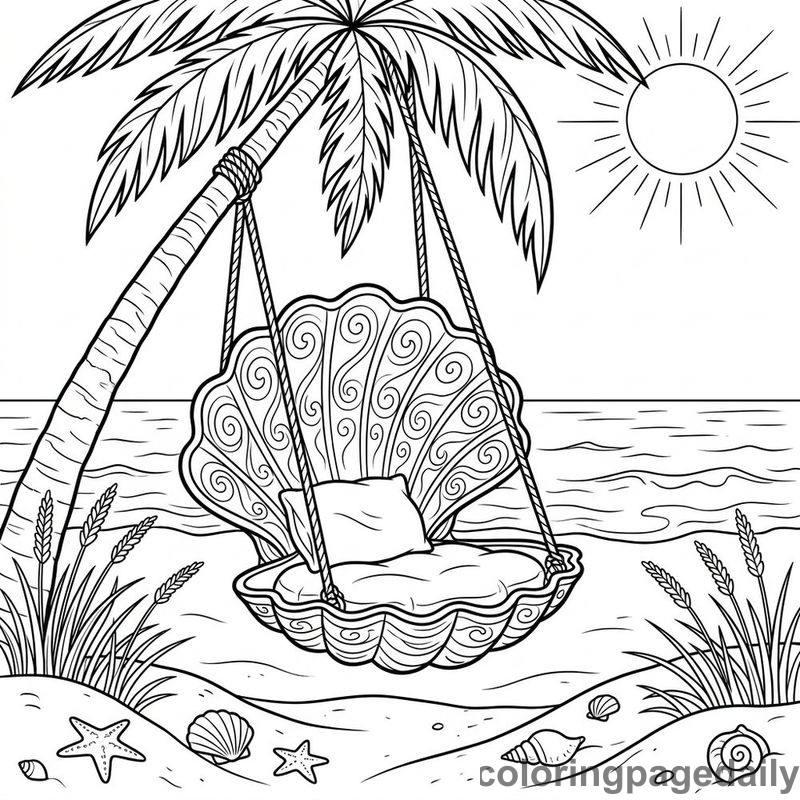
Kids love collecting seashells on sunny summer beach walks, but what exactly are they? A seashell is essentially a portable house. They are the protective outer skeletons made by soft-bodied animals called mollusks. As the mollusk grows, it uses minerals from the ocean to secrete calcium carbonate, making its shell bigger and stronger. Once the animal eventually passes away, the empty shell washes up on the shore. Our magical seashell beach swing page is a great way to start a conversation about marine ecosystems and how animals build their own natural habitats.
Lobsters are fascinating crustaceans with some very unusual anatomy. Unlike humans, lobsters don't have teeth in their mouths. Instead, they chew their food in their stomachs! They have a special digestive organ called a "gastric mill" that features three grinding surfaces (acting just like teeth) to break down their meals. Furthermore, they taste their food with their legs and "smell" the ocean currents using their antennae.
Next time your students or children sit down with the Sunny Summer Vacation Vol. 2 collection, use these fun facts to turn a simple coloring session into an exciting oceanic adventure. Happy coloring and learning!
This article is part of Sunny Summer Vacation Vol. 2 — browse all 19 coloring pages
