Coloring isn't just a fantastic way to develop fine motor skills; it's also a perfect gateway for introducing young minds to the wonders of paleontology! As your little learners explore the lush environments in our Playful Prehistoric Pals Vol. 3 collection, you can share some incredible, science-backed facts about these ancient animals.
Let's dive into some fascinating educational tidbits about our gentle giants and curious baby dinos that will turn your next coloring session into a prehistoric science lesson!
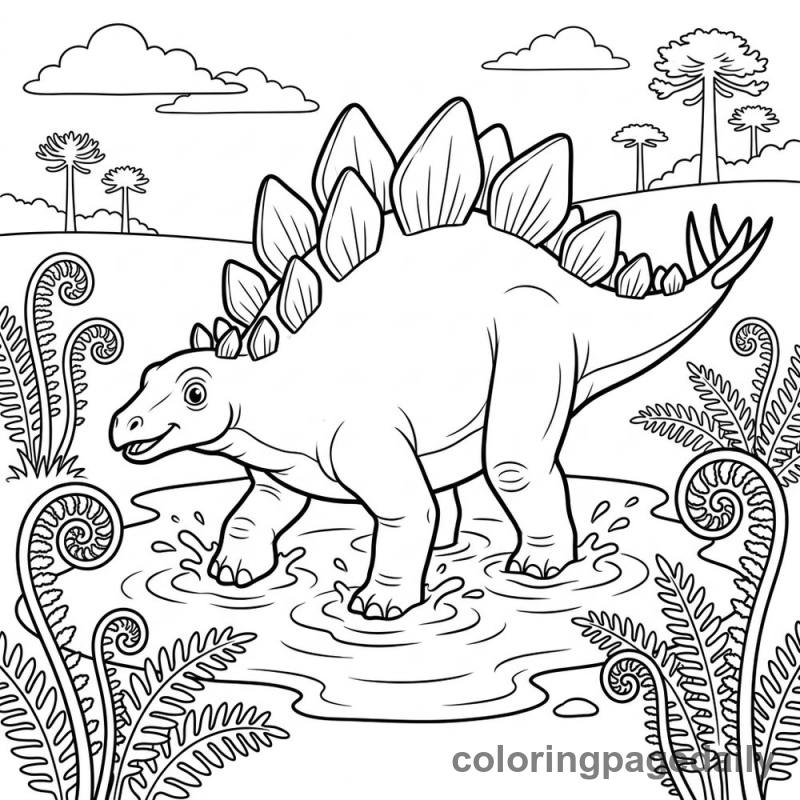
When kids color the iconic Stegosaurus, they almost always focus on the large, kite-shaped plates along its back. Did you know that these plates—called osteoderms—were not actually attached to the dinosaur's skeleton? Instead, they grew directly out of the skin! Paleontologists debate their exact purpose, but many believe they were used to regulate body temperature (acting like solar panels to warm up or cool down) or to display to other dinosaurs.
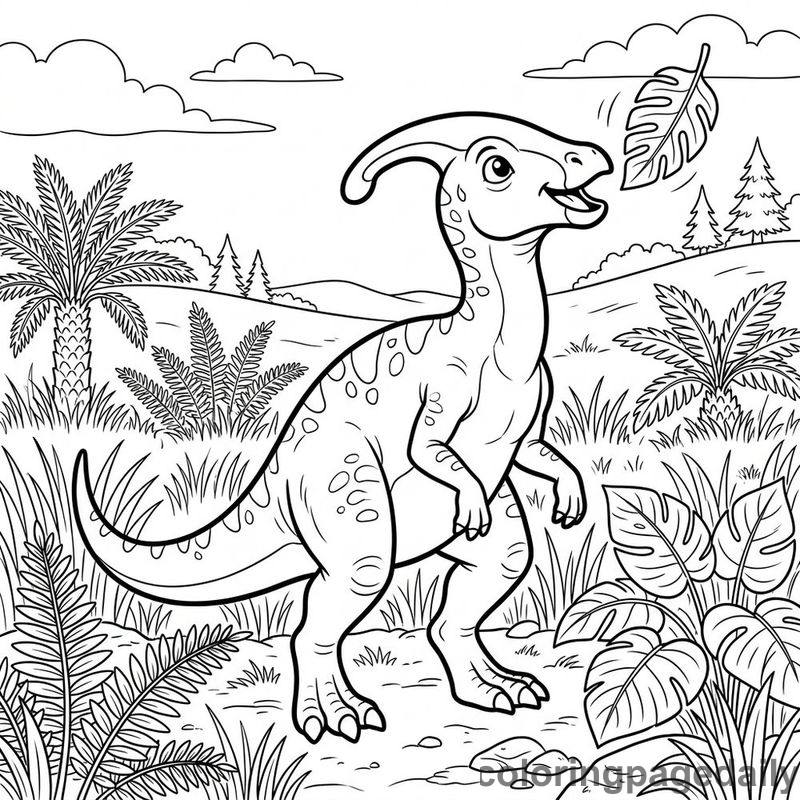
The Parasaurolophus is famous for the long, sweeping crest on the back of its head. This wasn't just a funky fashion statement! The crest was actually a hollow tube connected to the dinosaur's nasal passages. Scientists believe it acted like a giant resonating chamber. This allowed the Parasaurolophus to make loud, low-frequency sounds—much like a trombone or a foghorn—to communicate with its herd over long distances in the dense jungle.
The Iguanodon is a very special dinosaur in the history of science, but it thoroughly confused early paleontologists! This dinosaur possessed a sharp, conical thumb spike on each hand, which was likely used for defense against predators or for breaking open tough vegetation. However, when the first Iguanodon fossils were discovered in the 1820s, scientists didn't know where the spike belonged and mistakenly placed it on the dinosaur's nose, much like a rhinoceros horn! It wasn't until complete skeletons were discovered decades later in Belgium that they realized it was actually a thumb.
Whether resting under giant mushrooms or foraging for ferns, the Triceratops is hard to miss with its massive bony frill and three horns. This impressive skull could grow to be over 8 feet (2.4 meters) long, making it one of the largest and most striking heads of any land animal ever to live on Earth!
As your students or children bring these pages to life, try turning these facts into a fun conversation. Ask them what they think it would sound like if a Parasaurolophus honked, or what they would draw in the sand if they had an Iguanodon thumb spike. Happy coloring and discovering!
This article is part of Playful Prehistoric Pals Vol. 3 — browse all 14 coloring pages
