Welcome back to the age of dinosaurs! While coloring is a fantastic way to develop fine motor skills and spark creativity, it is also the perfect opportunity to sneak in some fun science lessons. As your little ones explore the lush, prehistoric jungle homes of our gentle giants, you can share these fascinating, science-backed facts with them to bring their artwork to life.
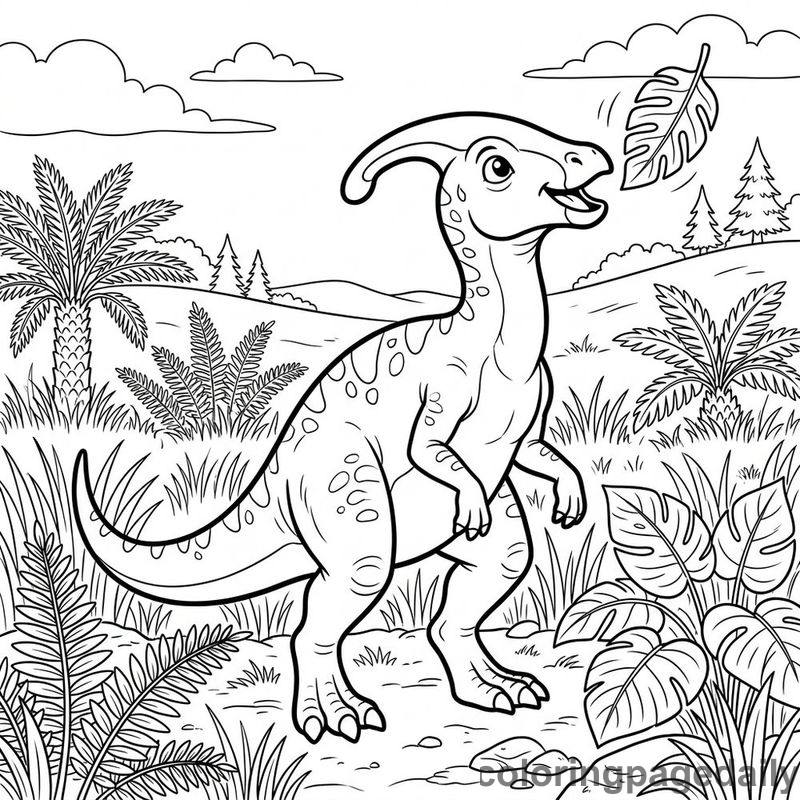
Have you ever wondered how dinosaurs communicated? The Parasaurolophus had a very special tool for talking to its friends! The long, sweeping crest on the back of its head was actually a hollow tube connected to its nasal passages. Scientists believe they used this crest like a giant musical instrument—pushing air through it to make loud, trumpeting sounds that could be heard across the prehistoric forest by the rest of their herd.
The Iguanodon had a very unique hand. Instead of a regular thumb, it sported a large, sharp, conical spike! When paleontologists first discovered Iguanodon fossils in the 1800s, they didn't know how to put the skeleton together and mistakenly thought the spike belonged on the dinosaur's nose, much like a rhinoceros horn. Today, we know these special thumbs were used to break open tough vegetation to eat and to defend against predators.
The name Triceratops literally translates from Greek to mean "three-horned face." While those impressive horns and massive size make it look like a fierce fighter, this dinosaur was actually a strict herbivore (plant-eater). That giant bony frill around its neck wasn't just armor, either. Paleontologists suspect it was covered in keratin and may have been brightly colored to attract a mate, or used to help regulate their body temperature.
Those iconic, kite-shaped plates running down a Stegosaurus’s back are instantly recognizable. But what were they for? While they certainly made the dinosaur look bigger and more intimidating to predators, many scientists believe they also acted as a natural air conditioning system. The plates were packed with tiny blood vessels, allowing the Stegosaurus to absorb heat from the sun on cool mornings, or release excess body heat to cool down during the hot afternoons.
Next time you sit down for a coloring session with the Playful Prehistoric Pals collection, try asking your young artists what they think their dinosaur might be eating or how it uses its special features. Happy coloring and learning!
This article is part of Playful Prehistoric Pals Vol. 3 — browse all 14 coloring pages
