Welcome back to our Ocean Wonders & Sunken Treasures collection! We are thrilled to introduce a fresh batch of coloring pages that highlight the diverse habitats and fascinating daily habits of our favorite marine animals. Whether you are a parent looking for a relaxing weekend activity or a teacher incorporating marine biology into your lesson plans, these new pages offer fantastic learning opportunities.
To help your little artists get the most out of these new additions, we've put together some fresh coloring tips focusing on seagrass meadows, intricate coral branches, and even transparent underwater bubbles!
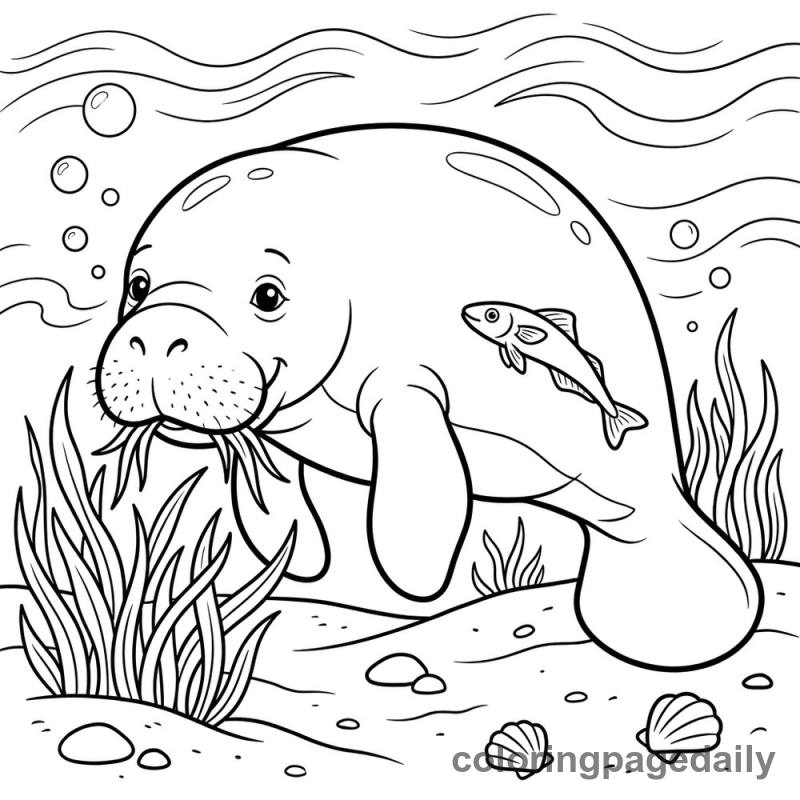
Did you know that manatees are often called "sea cows" because they spend up to seven hours a day grazing on underwater plants? Our new manatee page perfectly captures this peaceful behavior.
Coloring Tip: When coloring seagrass, try to avoid using just one flat shade of green. To create a lush, realistic underwater meadow, blend lime green, olive, and a touch of yellow. Add darker greens near the sandy bottom to show depth and shadows, and use lighter yellows near the tips where the ocean sunlight hits the blades!
Seahorses are not strong swimmers, so they use their prehensile (curved and gripping) tails to anchor themselves to corals and seaweeds. This clever adaptation keeps them from being swept away by strong ocean currents.
Coloring Tip: Staghorn coral can be tricky to color because of its many overlapping branches. Pick a primary color, like a vibrant orange or soft purple. Then, imagine the sun shining down from the top of the page. Color the tops of the branches lightly, and press harder with your crayon or pencil on the undersides to create realistic 3D shadows.
Dolphins are incredibly intelligent creatures. They have actually been observed creating perfect rings of air underwater just to play games and swim through them!
Coloring Tip: How do you color something made of air? Instead of leaving the bubble ring completely white, trace the inner and outer edges with a very light blue or cyan. Add a tiny, bright white streak on the upper curve as a "highlight," and lightly shade the surrounding water in a deeper blue. This contrast will make the bubble ring pop right off the page, giving it a cool, glassy effect!
Hermit crabs are nature's little explorers, constantly scuttling across the ocean floor for food and searching for new, larger shells to move into as they grow.
Coloring Tip: To make the ocean floor look like real sand instead of a plain yellow surface, try a fun art technique called "stippling." Use the tips of tan, brown, and pale yellow markers or colored pencils to make clusters of tiny dots. This creates a wonderful grainy texture that contrasts beautifully with the heavy, dark iron of the sunken anchor.
We can’t wait to see how you and your students bring these underwater scenes to life. Happy coloring, and keep exploring the deep blue!
This article is part of Ocean Wonders & Sunken Treasures — browse all 10 coloring pages
