Spring is the perfect time to observe how the natural elements interact to bring our world to life. From gentle breezes that scatter seeds to flowing streams and grounding earth, nature's magic is all around us.
In our Nature's Little Helpers collection, adorable animals and mythical friends are busy caring for the environment. To help your children or students elevate their coloring skills, we’ve put together a guide on how to creatively color the natural elements. Teachers can even use these artistic exercises as a springboard for science lessons!
Rendering rocks might seem as simple as picking up a single gray crayon, but stones are actually full of hidden colors!
Coloring Tip: Encourage kids to layer light blues, warm browns, and even faint purples underneath their grays to create realistic, three-dimensional stones.
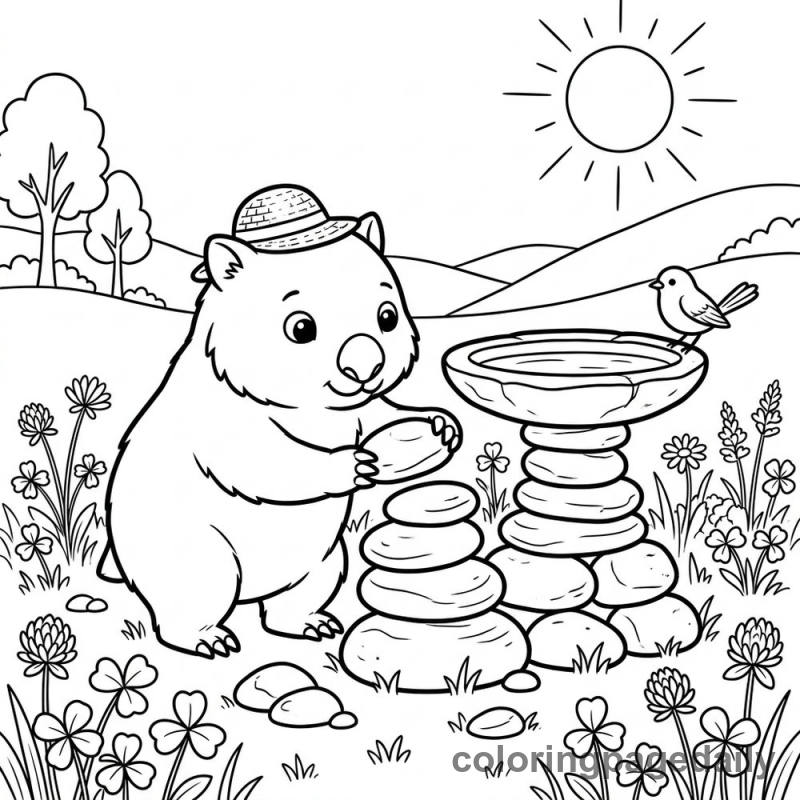
Let's look at our focused wombat building a birdbath. By layering different earthy tones, kids can make the river stones look beautifully weathered.
For a fantastical twist, check out our Pebble Golem making a sundial. Have your little artists add tiny flecks of green along the edges of the stones to represent fresh spring moss growing in the meadow. It's a great way to discuss how the earth provides habitats for microscopic plant life!
Water is constantly moving and reflecting light, which makes it incredibly fun to color.
Coloring Tip: When coloring water flowing from a shell or a river current, teach your little artists to leave small slivers of the white paper untouched. This technique, called "negative space," creates the illusion of shining reflections and sunlight bouncing off the water.
Take our magical Baby Kraken, for example. When coloring the water pouring onto the kelp garden, try using analogous colors—shades that sit next to each other on the color wheel, like teal, blue, and seafoam green. Blending these together makes the water look deep and magical.
How do you color something you can't see? By showing how it affects the objects around it!
Coloring Tip: Use the side of a colored pencil or a soft pastel to create gentle, sweeping swirls in the background. This implies a gentle spring breeze moving through the scene.
Our cheerful axolotl hanging a recycled key wind chime is a perfect practice page. You can almost hear the vintage keys clinking in the wind. Kids can draw faint, curved lines around the chimes to show the vibration of sound and air.
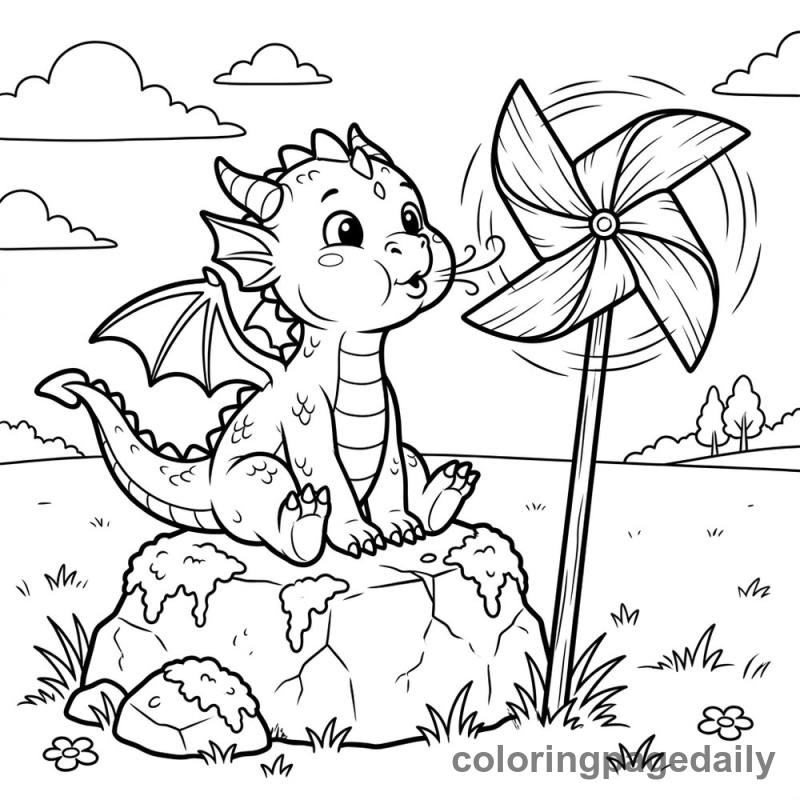
Another great example of capturing motion is our baby dragon playing with a wooden pinwheel. Try drawing dashed lines behind the pinwheel to show the direction of the gusting air, an excellent introduction to illustrating kinetic energy!
Coloring is a fantastic way to discuss how the elements work together to sustain our planet. As your children experiment with these techniques, they'll not only build their fine motor skills but also develop a deeper appreciation for the world outside their window. Grab your favorite coloring supplies and let the elements inspire you!
This article is part of Nature's Little Helpers — browse all 20 coloring pages
