The intersection of human creativity and the untamed beauty of nature is a wonderful concept to explore with children. In our latest update to the Magical Spring Gardens collection, we are thrilled to introduce a brand-new series of coloring pages that blend the worlds of art, music, and literature with the enchanting rebirth of spring!
Whether you are a teacher looking for cross-curricular art activities or a parent wanting to spark some weekend imagination and mindfulness, these new additions offer a perfect canvas for young artists.
Music and nature go hand in hand, from the chirping of early morning songbirds to the rhythmic rustle of wind through newly budded leaves. We’ve brought this auditory harmony to life visually in our newest batch of illustrations.
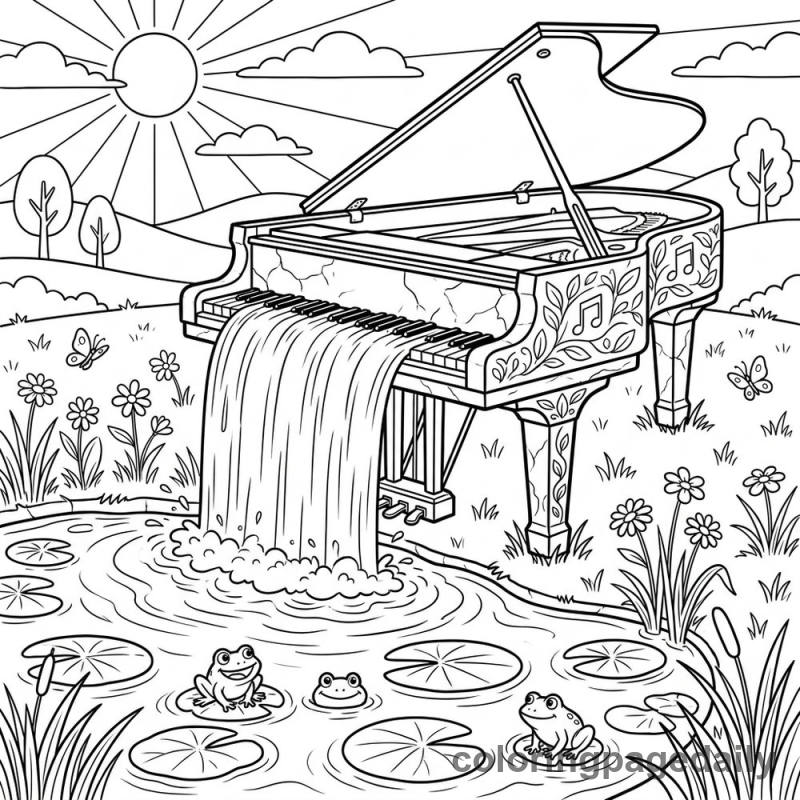
Have your little ones ever imagined what a song might look like if it transformed into a living landscape? Our grand piano page turns classical keys into a cascading waterfall. It is a fantastic visual prompt to play some classical music while your children color, asking them to match their color choices to the tempo of the music.
Right next to it in our update is another musical marvel.
The accordion page is an excellent opportunity to talk to children about rhythm, geometry, and patterns. The repeating folds of the bellows create perfect terraced steps for blooming flowers, making it a highly satisfying page for kids who love coloring structured, repeating shapes.
Beyond musical instruments, our new pages also celebrate visual arts and storytelling.
The paint palette garden is a literal interpretation of "painting with nature." Instead of mixing wet pigments, children can color vibrant flower beds springing directly from the palette's wells. It is a fantastic starting point for discussing color theory in the classroom or at the kitchen table—challenge your kids to color each flower bed in a different primary or secondary color!
For the little bookworms, the magical pop-up book page bridges the gap between reading and art, showing how stories can quite literally spring to life from the page.
How do you capture the elusive "magic" in our Magical Spring Gardens? Several of our new pages feature glowing, ethereal elements.
Here are two advanced yet highly accessible techniques to help kids and students create a luminous, glowing effect on their pages:
* The Halo Technique: To make blossoms or magical sparks look like they are emitting light, start by coloring the core of the object with a very pale yellow, or leave it stark white. Then, take a slightly darker, vibrant color (like a bright gold or neon green) and lightly color a "halo" immediately surrounding the object. If you are using colored pencils, a cotton swab can be used to gently smudge and blend the halo outward into the background for a soft-focus glow. * High Contrast Backgrounds: Magic shines brightest in the dark! Encourage kids to use deep, rich colors for the negative space around the glowing objects. Twilight blues, deep purples, or shadowed forest greens work perfectly. The stark contrast will trick the eye into seeing the lighter, central elements as an active light source.
We hope these new pages inspire symphonies of color and masterpieces of imagination in your home or classroom. Happy coloring!
This article is part of Magical Spring Gardens — browse all 15 coloring pages
