When children think about community helpers, they often focus on the uniforms they wear or the vehicles they drive. But did you know that many everyday professions are secretly packed with science, technology, engineering, and math (STEM)? Combining our educational coloring pages with fascinating real-world facts is a fantastic way to spark curiosity in your little learners.
Dentists: The Heroes of Health Science
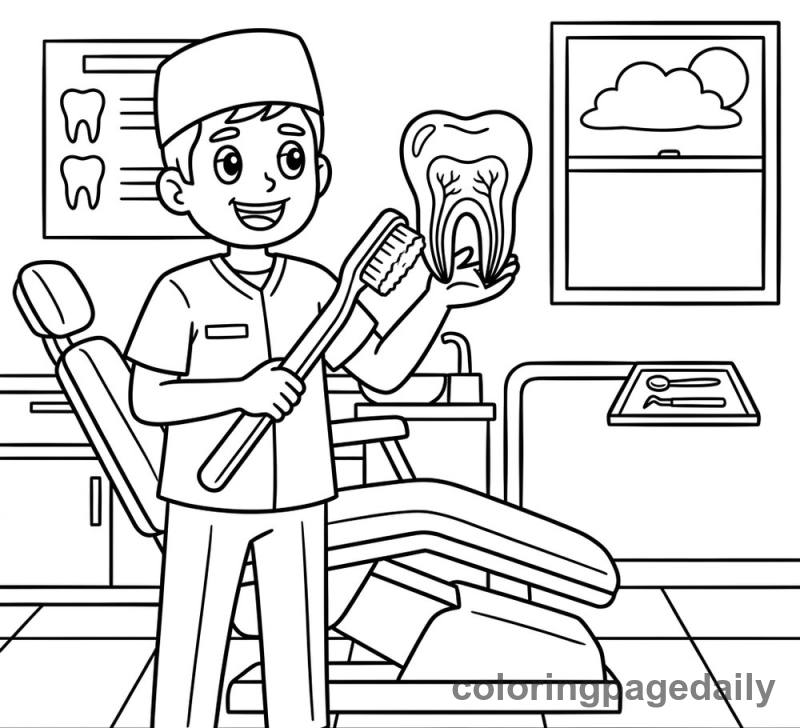
Dentists do much more than just clean teeth; they are experts in human anatomy! Did you know that tooth enamel—the shiny white outer layer of your teeth—is the hardest substance in the entire human body? It is actually stronger than your bones! Dentists also use incredible technology like X-rays to look right through your gums and check the hidden roots of your teeth.
A cheerful dentist holding an oversized educational tooth model and a giant toothbrush
Electricians: Masters of Physics
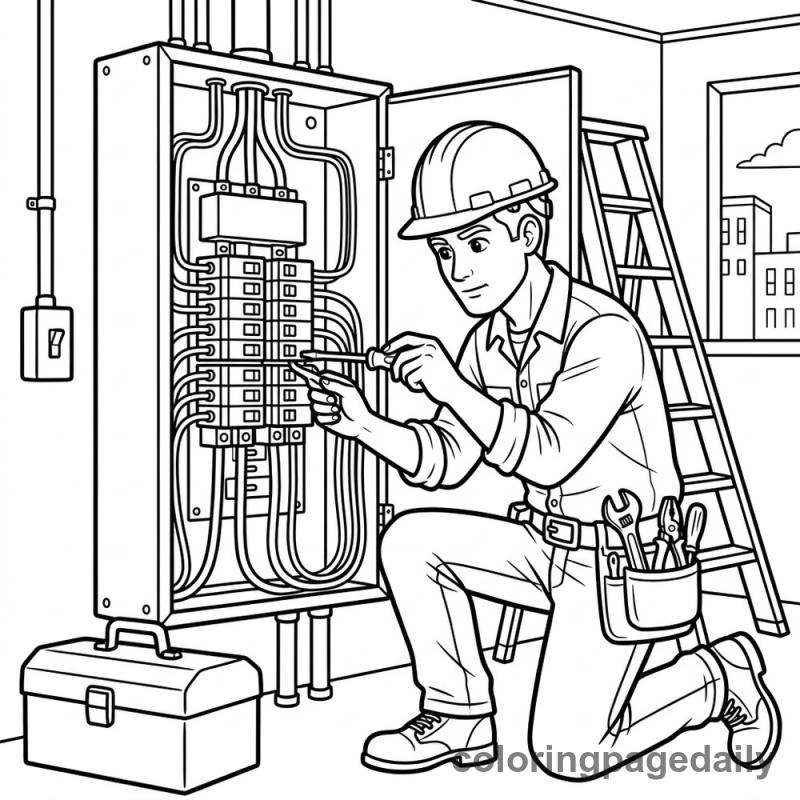
Every time you flip a light switch or plug in a tablet, you are relying on the work of an electrician. These professionals understand the complex physics of how electrical currents flow. Here is an electrifying fact: the electrical energy moving through wires travels at nearly the speed of light! Electricians must understand how to safely build "circuits," which are continuous loops that allow electricity to power our homes without escaping.
A focused electrician carefully connecting thick wires inside a large metal electrical panel
Bakers: Delicious Chemistry
Baking isn't just cooking; it is delicious chemistry! When a baker makes a fresh loaf of bread, they use a special ingredient called yeast. Yeast is actually a tiny, single-celled living organism. When it eats sugars in the dough, it releases carbon dioxide gas. These little gas bubbles get trapped in the sticky dough, which is exactly what makes the bread rise and become fluffy. Bakers also have to be expert mathematicians, as mixing the wrong fractions of ingredients can make a cake completely flop!
A cheerful baker sliding round loaves of dough into a warm brick oven using a wooden peel
Land Surveyors: Everyday Geometers
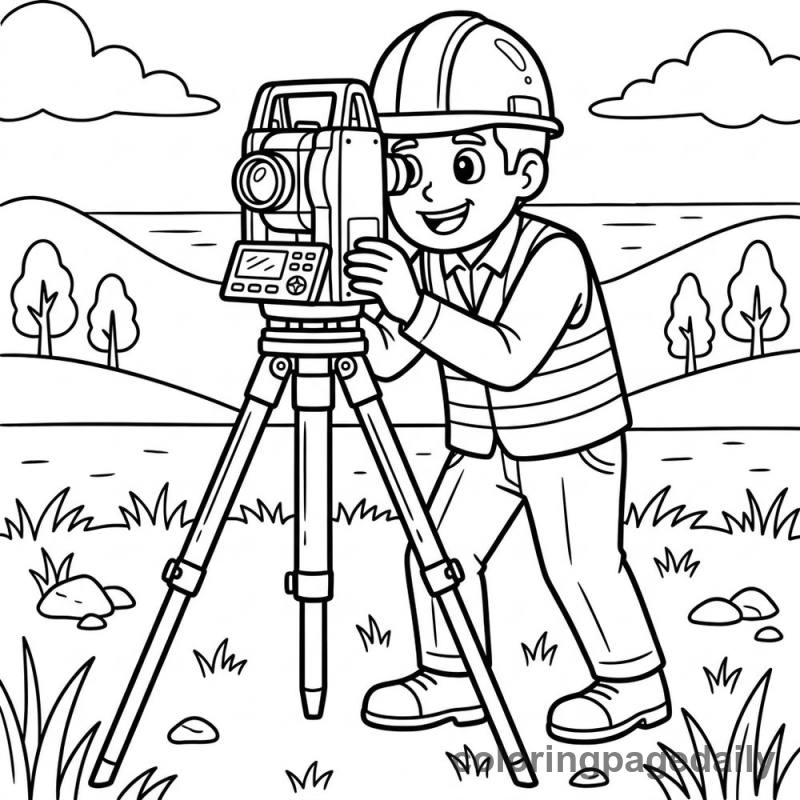
Before a school, hospital, or playground can be built, a land surveyor has to measure the earth. Surveyors use advanced geometry and trigonometry to figure out the exact shape, height, and borders of a piece of land. They use high-tech digital measuring stations and connect to GPS satellites high up in space to calculate distances down to the millimeter.
A focused land surveyor looking through the lens of a digital measuring station in a grassy field
Wildlife Photographers: Biology and Optics
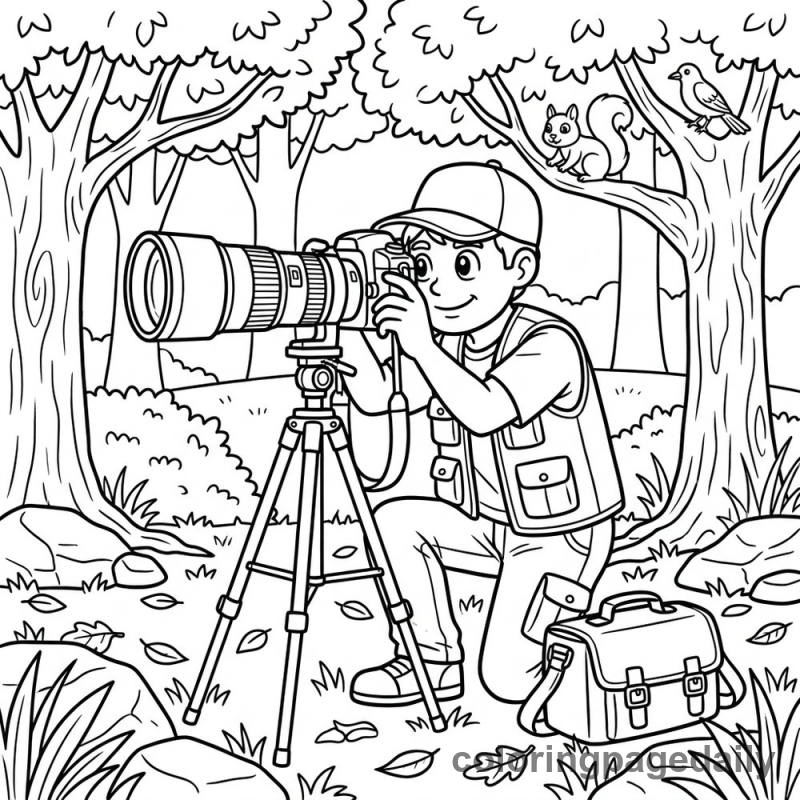
Capturing the perfect picture of a wild bear or a soaring bird requires a lot of science. Wildlife photographers need to study animal biology and habitats so they know exactly where and when to find their subjects. They also use the science of optics. The long, heavy lenses on their cameras use curved glass to bend light, making animals that are miles away look like they are standing right in front of you!
A dedicated wildlife photographer looking through a long camera lens mounted on a tripod in the forest
Next time your students or children sit down with their crayons, share these fun STEM facts with them. Learning the "how" and "why" behind these essential careers transforms a simple coloring activity into an engaging lesson about the science of the world around us.