When children color pictures of people at work, they are doing more than just filling in the lines—they are exploring the diverse roles that make our neighborhoods function. But did you know that many everyday professions rely on fascinating science, complex mathematics, and ancient history?
Let's dive into some incredible educational facts about a few of the community helpers featured in our coloring collection. Sharing these tidbits with your students or children is a fantastic way to spark curiosity and turn a simple art session into an engaging mini-lesson!
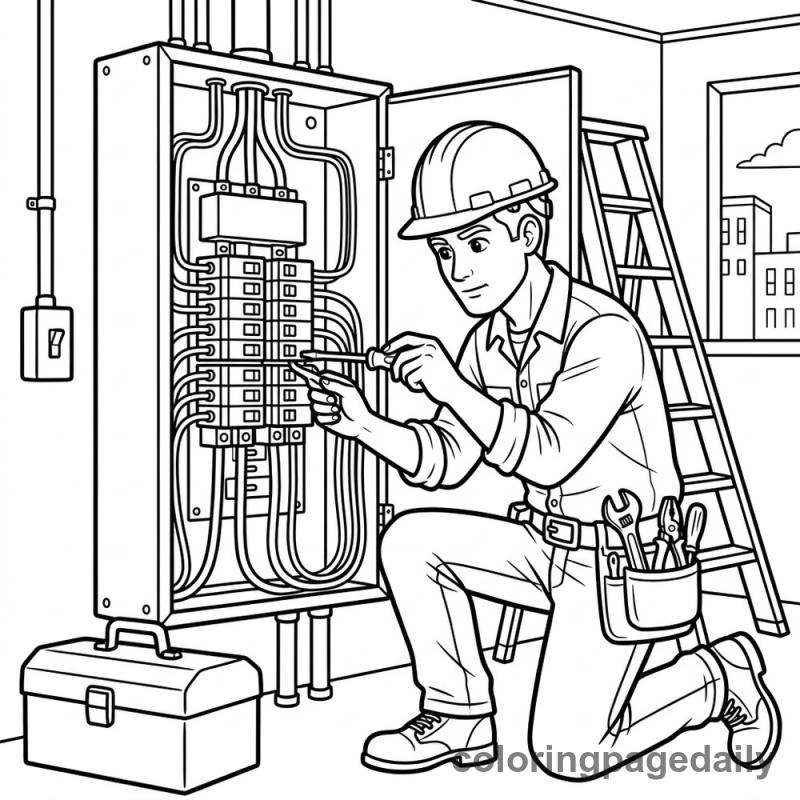
Electricians are essentially practical physicists. They work with invisible forces to safely power our homes, schools, and hospitals. Here is an electrifying fact: the electrical energy that travels through wiring moves incredibly fast—close to the speed of light! Electricians must have a deep understanding of complete circuits, ensuring that electrons have a continuous, safe loop to travel through. Without their expert knowledge of conductivity and insulation, we wouldn't have safe access to the lights and appliances we use every day.
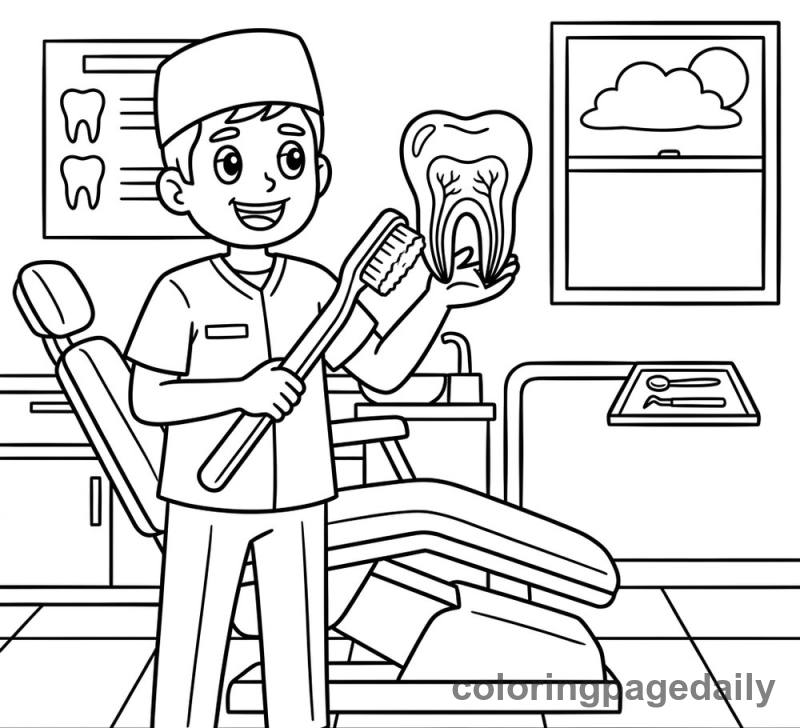
Dentistry is a highly specialized branch of medicine that keeps our smiles bright, and it deals with some extreme biology. Did you know that tooth enamel—the shiny, outer layer of your teeth—is the hardest substance in the entire human body? It contains a high percentage of minerals, making it even stronger than our bones! Dentists help us protect this precious enamel because, unlike our skin, it cannot heal or naturally regrow itself once it decays. This biological fact makes brushing and flossing incredibly important.

Before a new neighborhood, library, or road can be built, a land surveyor has to measure the earth. Surveying is actually one of the oldest professions in the world. Thousands of years ago, ancient Egyptians used early surveying techniques, ropes, and geometry to redraw farm boundaries after the Nile River flooded each year. Today, surveyors use highly advanced technology like lasers, digital measuring stations, and GPS to calculate angles and distances with pinpoint accuracy.
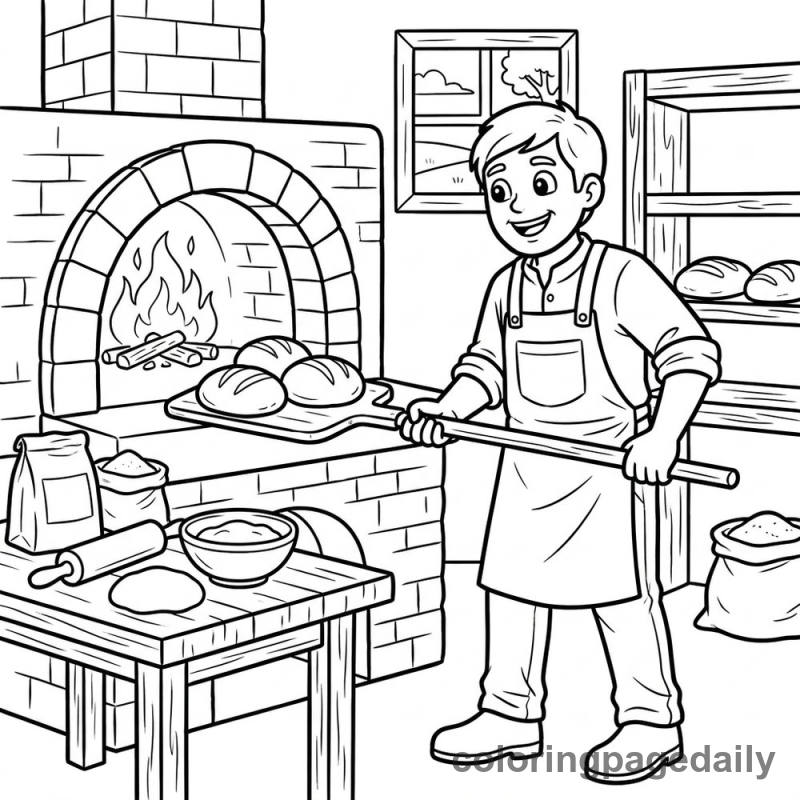
Baking might seem like pure culinary art, but it is actually delicious, edible chemistry. When a traditional baker makes a loaf of bread, they rely on a tiny, single-celled organism called yeast. As the yeast consumes natural sugars in the dough, it releases carbon dioxide gas. These little gas bubbles get trapped in the gluten structure of the dough, causing the bread to expand and rise. This chemical reaction is exactly what gives baked bread its soft, fluffy texture!
By introducing these concepts, you can help children see that community helpers aren't just performing simple tasks; they are actively applying science, math, and history to make our world a better place.
This article is part of Community Helpers & Professions — browse all 20 coloring pages
