As children color and create, their minds are wide open to learning about the world around them. Our "STEM & Science Discoveries Vol. 3" collection features adorable robot scientists busy at work, making it the perfect backdrop for introducing fundamental science and engineering concepts.
If you're a parent or teacher looking to sprinkle some educational magic into coloring time, we've gathered some fascinating STEM facts to share with your little ones while they bring these pages to life!
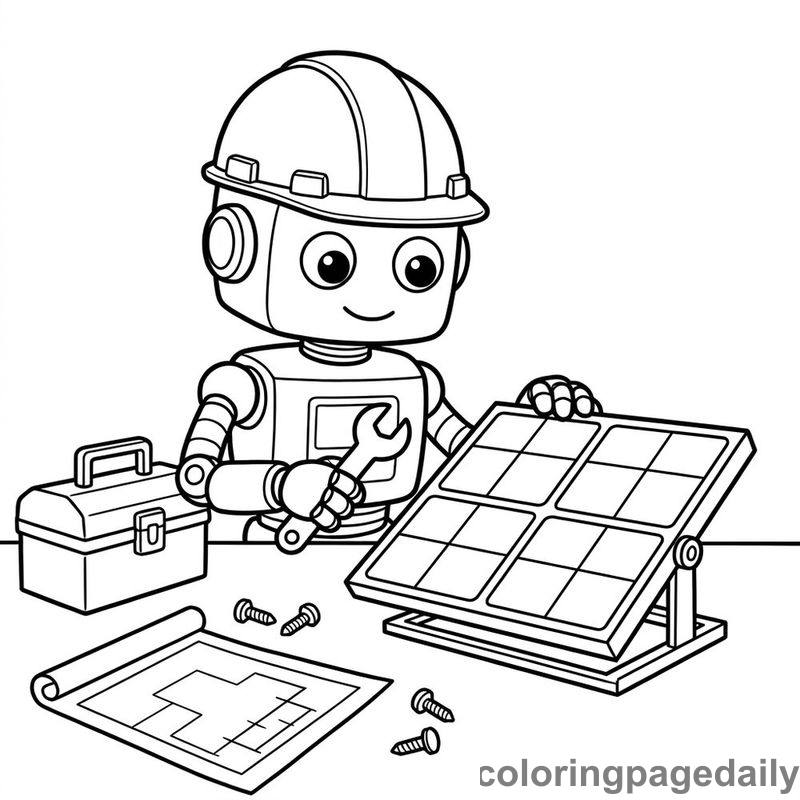
How do solar panels work? When coloring our solar panel engineer, you can talk about how the sun provides more than just light and warmth—it provides power! Solar panels are made of special materials called photovoltaic cells. The word "photo" means light, and "voltaic" means electricity. When sunlight (which travels in tiny energy packets called photons) hits these cells, it knocks electrons loose, creating an electrical current. It’s a completely clean, renewable way to generate electricity without creating pollution!
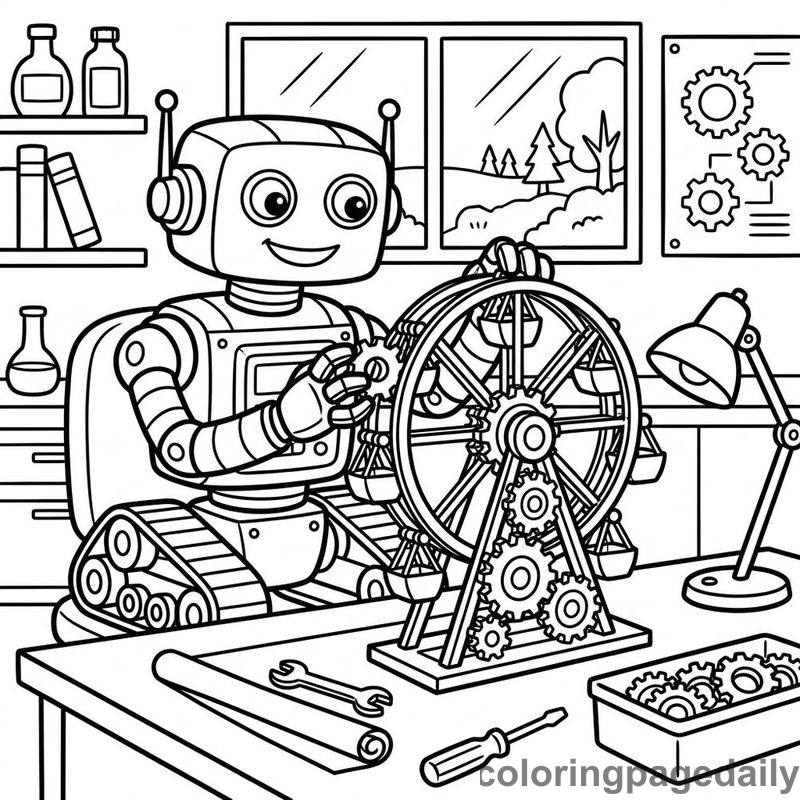
Why do machines use gears? Our robot building a gear-powered Ferris wheel is a fantastic introduction to simple machines. Gears are essentially wheels with teeth. When the teeth of two gears interlock, turning one gear will turn the other. Here is the cool science part: if a small gear is connected to a larger gear, the small gear has to spin faster to make the large one turn just once. This relationship changes the speed and rotational force (called torque) of a machine. It’s the same mechanical magic that makes bicycles, cars, and analog clocks work!
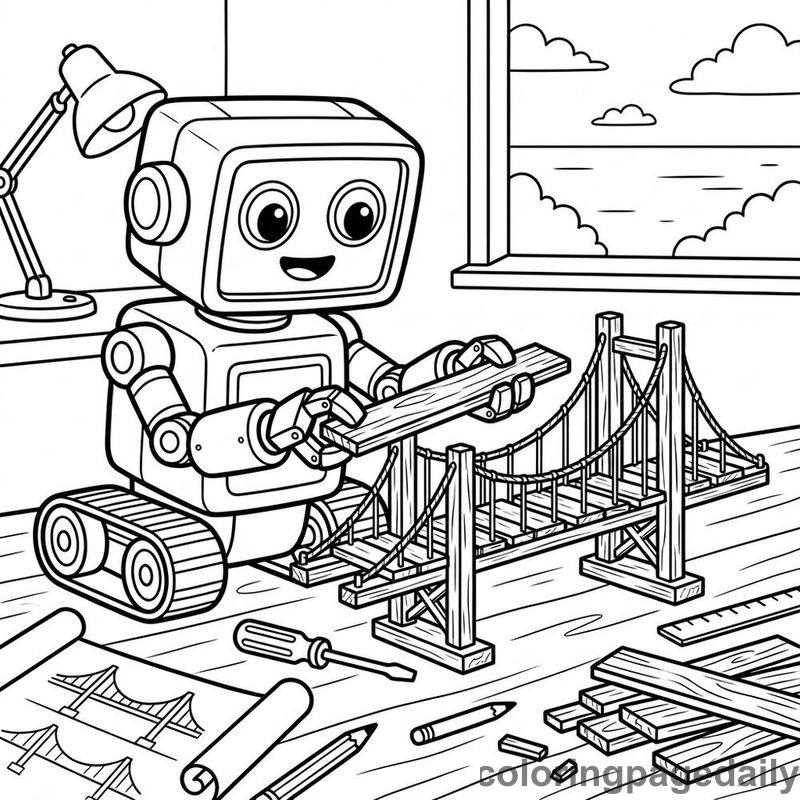
How do massive bridges stay up? Civil engineering is all about balancing forces. As your child colors the robot building a suspension bridge, you can introduce them to two important scientific words: tension and compression. In a suspension bridge, the heavy cables are stretched tight—this pulling force is called tension. Meanwhile, the tall towers are being pushed down into the ground by the weight of the bridge—this pushing force is called compression. By balancing tension and compression perfectly, engineers can build bridges long enough to cross massive rivers and bays.
What happens when you spin a rainbow? This coloring page is a great opportunity to talk about optics and the science of light! In 1666, famous scientist Sir Isaac Newton discovered that plain white light is actually made up of all the colors of the rainbow. If you paint a wheel with the colors of the spectrum (red, orange, yellow, green, blue, indigo, violet) and spin it really fast, an amazing optical illusion happens. Human eyes can't process the colors moving that quickly, so our brains blend them all together, and the wheel appears white or light gray!
Next time your students or children sit down with their crayons, try sharing one of these bite-sized lessons. Combining art with STEM facts helps solidify these concepts and encourages a lifelong curiosity about how the world works. Happy coloring and experimenting!
This article is part of STEM & Science Discoveries Vol. 3 — browse all 9 coloring pages
