Combining art with education is one of the most effective ways to help children retain new information. As your students or children dive into our STEM & Science Discoveries collection, you have the perfect opportunity to introduce them to the wonders of the natural and physical world.
To help you guide these educational conversations, we've gathered some fascinating, kid-friendly science facts that pair perfectly with our newest coloring pages. Grab your crayons, and let's explore!
Have you ever wondered how a Newton's Cradle works? When you pull back the first metal sphere and let it go, it strikes the others, but only the ball on the exact opposite end swings outward!
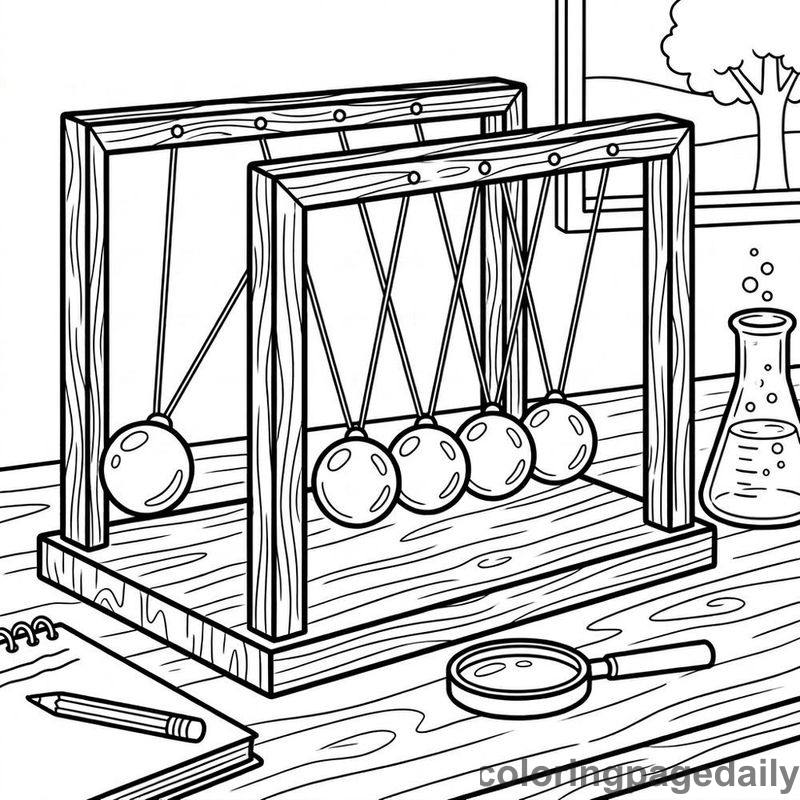
This is a perfect demonstration of two physics principles: the conservation of energy and the conservation of momentum. The energy from the first ball travels invisibly through the middle balls until it reaches the last one, pushing it into the air. Discussing this while coloring helps kids visualize invisible forces at work.
When we look closely at a leaf, we see a beautiful network of lines. But these lines aren't just for decoration—they are the plant's plumbing system!
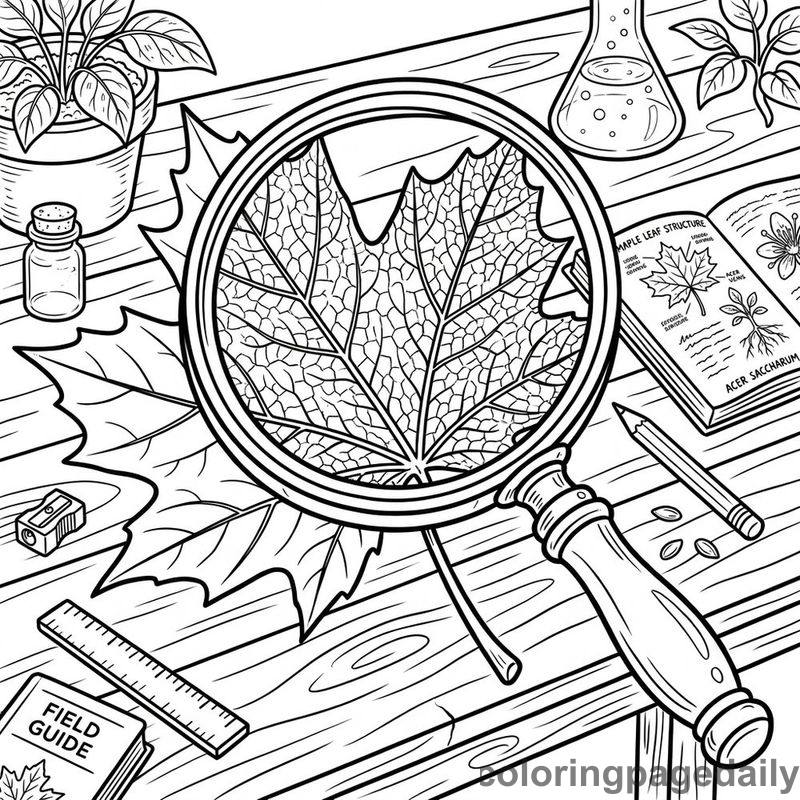
These veins contain two types of tiny tubes: xylem and phloem. The xylem brings water and minerals up from the roots, while the phloem distributes the sugary food the leaf makes during photosynthesis to the rest of the plant. It's a microscopic highway system right in your backyard.
It's a common misconception that telescopes simply "zoom in" on stars. In reality, large observatory telescopes act more like giant buckets that collect light!
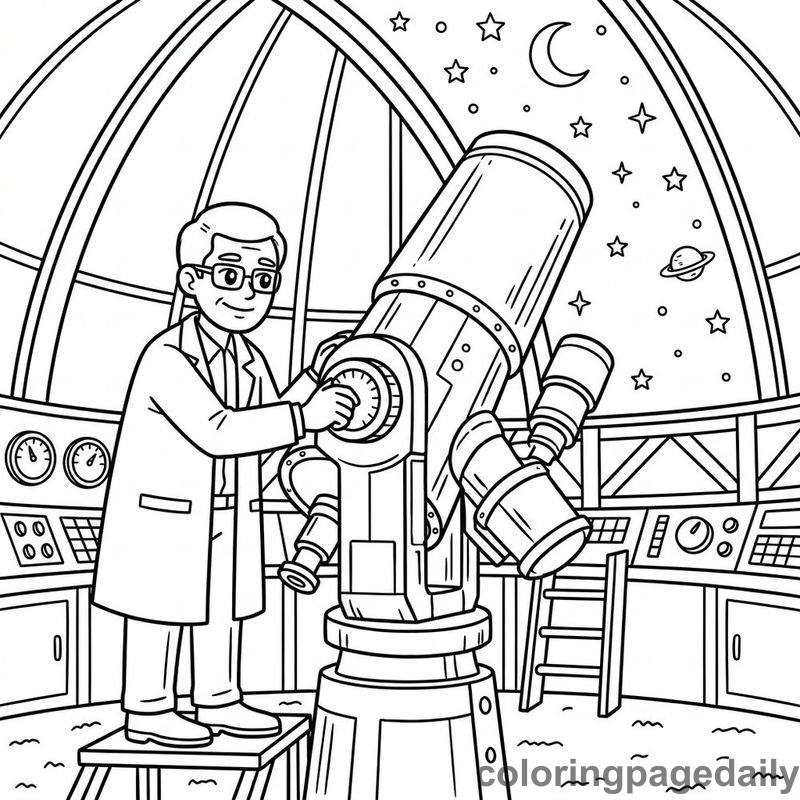
Because stars and galaxies are incredibly far away, the light reaching Earth is very faint. Astronomers use massive, curved mirrors inside their telescopes to gather as much of this faint light as possible. The wider the mirror, the brighter and clearer the image of the distant universe becomes.
Gears are one of the most important simple machines in engineering. They are essentially wheels with teeth that lock together to transfer force and motion.

When a small gear turns a larger gear, something interesting happens: the large gear turns more slowly than the small one, but it turns with much more force (called torque). This mechanical advantage is how engineers build everything from bicycles and clocks to massive construction cranes.
By sharing these STEM facts during coloring time, you transform a simple artistic activity into an engaging science lesson. Encourage your little learners to ask questions, and who knows—you might just inspire the next great engineer, botanist, or astronomer!
This article is part of STEM & Science Discoveries — browse all 19 coloring pages
