Science and art are a perfect match! While we often think of STEM (Science, Technology, Engineering, and Math) as purely analytical, it takes an incredible amount of creativity to design a new space vehicle or imagine the mysteries of the cosmos. In fact, adding Art to the mix turns STEM into STEAM! For children, coloring these scientific concepts is a fantastic way to engage with complex ideas in a relaxed, fun environment.
To help your little scientists bring their laboratory and space pages to life, we've put together some creative coloring tips that focus on light, texture, and motion.
Many scientific tools, from microscopes to telescopes, rely on glass lenses to help us see the unseen. To make glass look realistic and transparent on the page, teach your kids about "reflections."
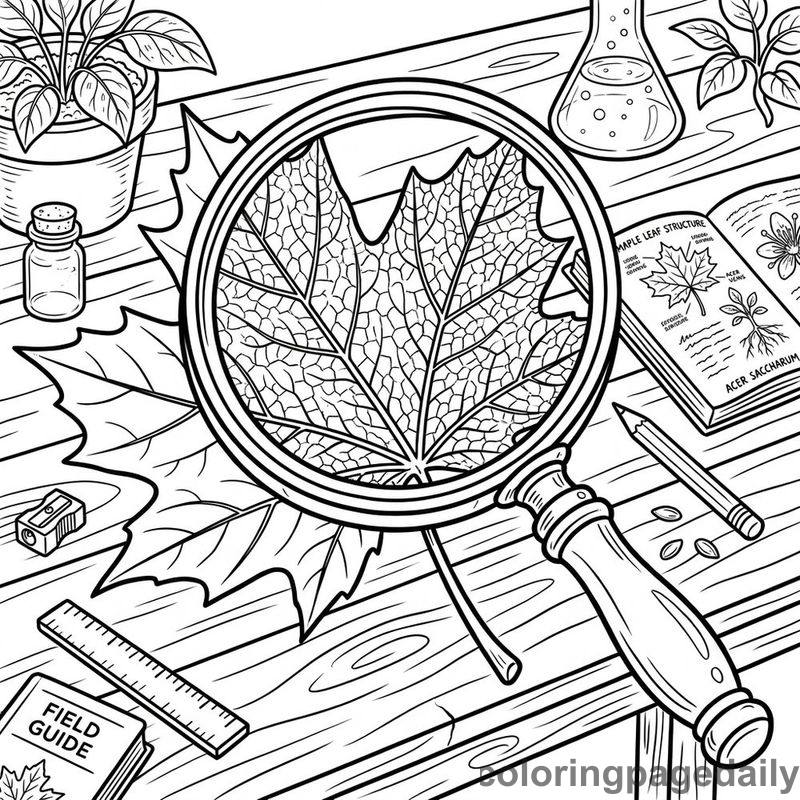
When coloring a magnifying glass or a beaker, try using very light blue and gray tones, but leave a curved streak of pure white paper untouched to mimic a glare from the light! This technique makes the glass look curved and shiny. It works wonderfully for the dials, monitor screens, and glass elements when coloring our busy astronomer in the observatory.
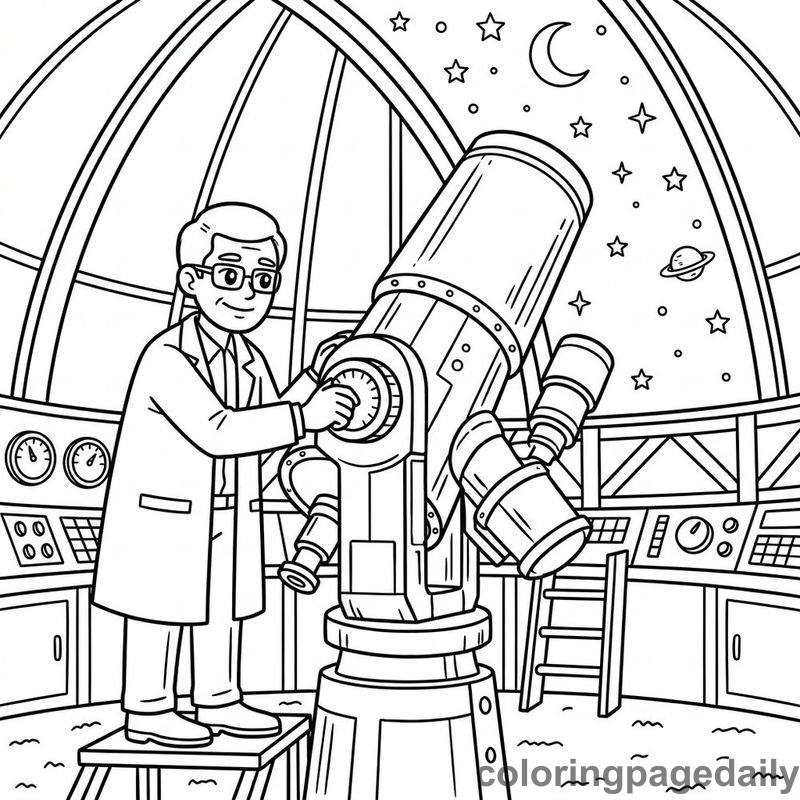
When kids see a space-themed page, they might be tempted to grab their black crayon or marker to fill in the background. Encourage them to look at real NASA photos of space! They will see that the cosmos is full of color.
Have them use deep navy blues, rich purples, and even dark magentas to create a galactic nebula effect. Blending these dark, rich colors around the stars and floating space vehicles makes the scene "pop" far more than a flat black background. While they color, it's a great time to ask questions—like why astronauts might want to grow plants in a space pod (Hint: plants provide oxygen and fresh food!).
Physics is all about energy and movement. But how do you show movement on a static coloring page? It’s all about the direction of your coloring strokes!
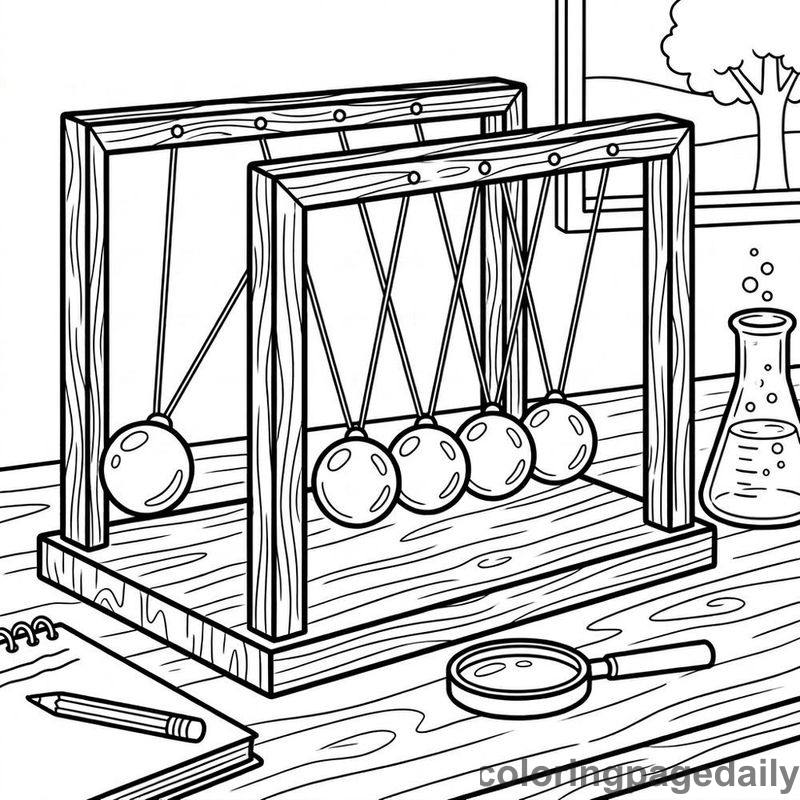
For objects that are moving, like the swinging metal sphere on a physics toy or interlocking gears, color using quick, directional strokes that follow the curve of the swing. You can even lightly smudge the color on the trailing edge of the moving object with a finger or tissue to create a cool "motion blur" effect.
Science isn't just machines and outer space; it's also biology and geology! When coloring natural elements like leaves or rocks, avoid coloring everything one solid shade. Use layered greens and yellows for leaves to show how chlorophyll varies, and mix grays, browns, and faint blues to give river rocks a realistic, bumpy texture.
By using these simple artistic techniques, kids aren't just coloring—they are observing how light, shadow, and color work in the real world. Grab your coloring supplies and happy experimenting!
This article is part of STEM & Science Discoveries — browse all 19 coloring pages
