Welcome to the latest update in our STEM & Science Discoveries coloring collection! While our previous updates introduced you to futuristic space explorers and microscopic biology, this month we are bringing science back down to earth. We are thrilled to announce a brand-new batch of coloring pages focused on classic laboratory tools, fundamental physics, and real-world engineering.
These new additions are designed to spark conversations about how the physical world works, from the simplest mechanics to the transfer of energy. Let’s dive into what’s new!
Before we can understand complex science, we have to master observation. Our new lab tool pages celebrate the classic instruments that have helped scientists make discoveries for centuries.
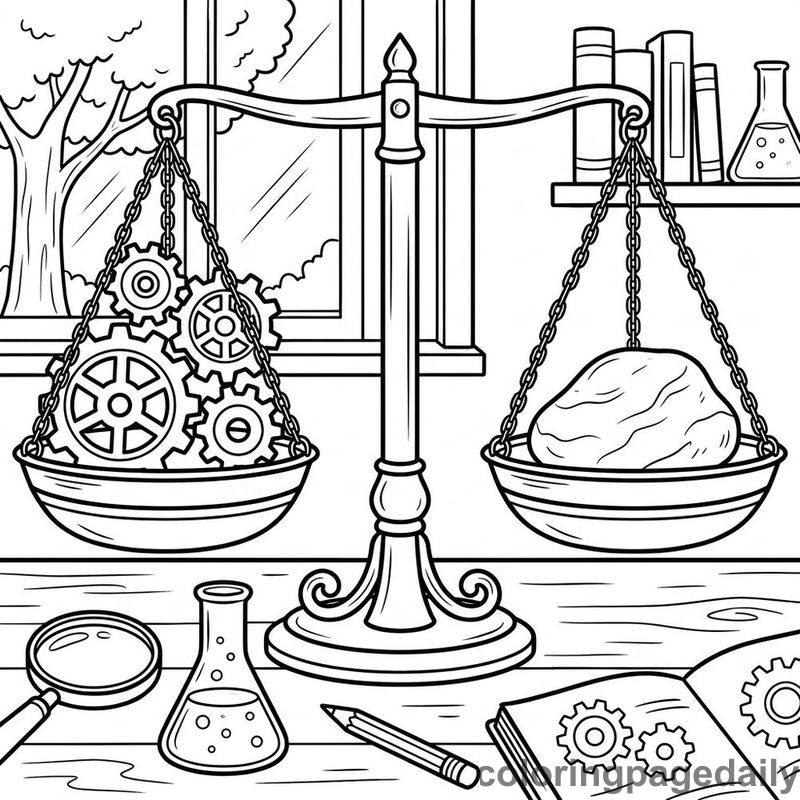
The Science Lab Balance Scale page is a wonderful way to introduce the concept of mass and weight. The illustration beautifully contrasts the natural world (a smooth river rock) with human engineering (metal gears). When coloring this page, encourage kids to use contrasting colors—perhaps earthy browns and grays for the rock, and bright metallic yellows or silvers for the brass scale and gears.
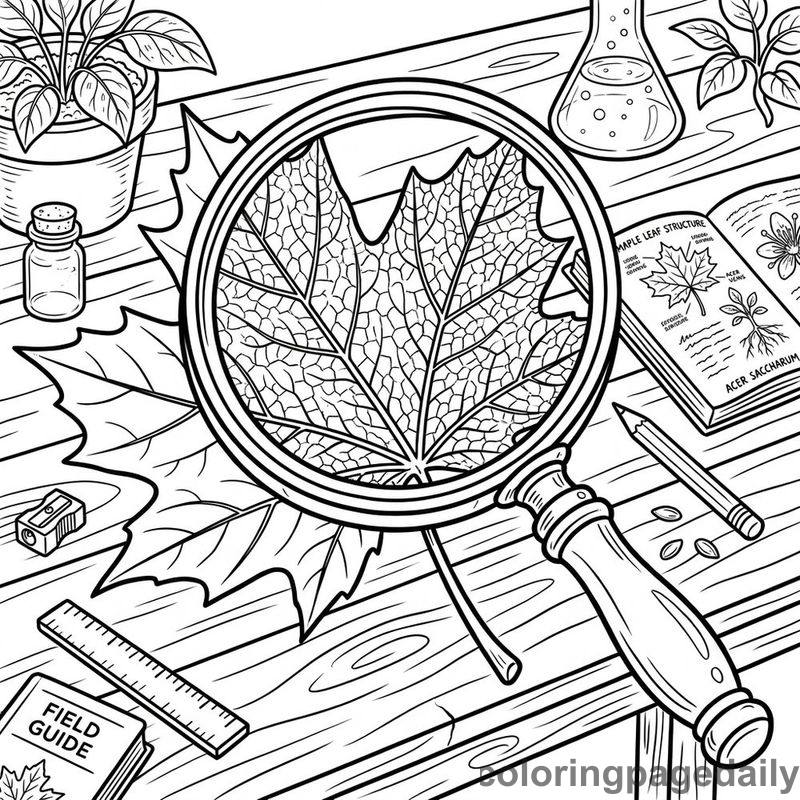
Similarly, the Magnifying Glass Inspecting Leaf page allows children to focus on the intricate patterns found in nature. As they color the branching veins of the maple leaf, you can explain how these veins act like tiny highways, transporting water and nutrients throughout the plant to keep it healthy.
Physics can sometimes feel like a daunting subject, but introducing it through familiar toys and visuals makes it instantly accessible.
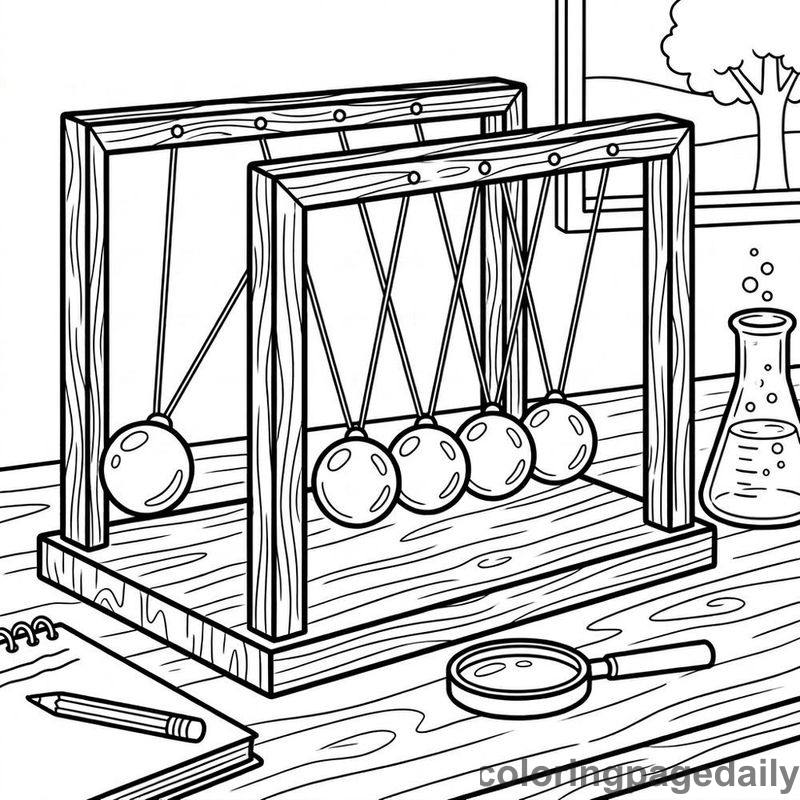
We've added a beautifully detailed Newtons Cradle Physics Toy to the collection. This classic desk toy is a perfect visual representation of the conservation of momentum and energy. As your little learners color the swinging metal sphere, you can talk about how energy travels through the resting spheres to push the one on the opposite end. It’s a great opportunity to practice shading to give those spheres a shiny, three-dimensional appearance!
Science isn't just about theories; it's about building and fixing things! Our new engineering pages highlight both theoretical design and practical application.

In the Robot Drawing Gear Diagram page, a friendly robot maps out an interlocking gear system on a chalkboard. Gears are simple machines that change the direction and speed of a force. You can ask your child to trace the path of the gears with their finger and guess which way the final gear will turn based on the movement of the first one.
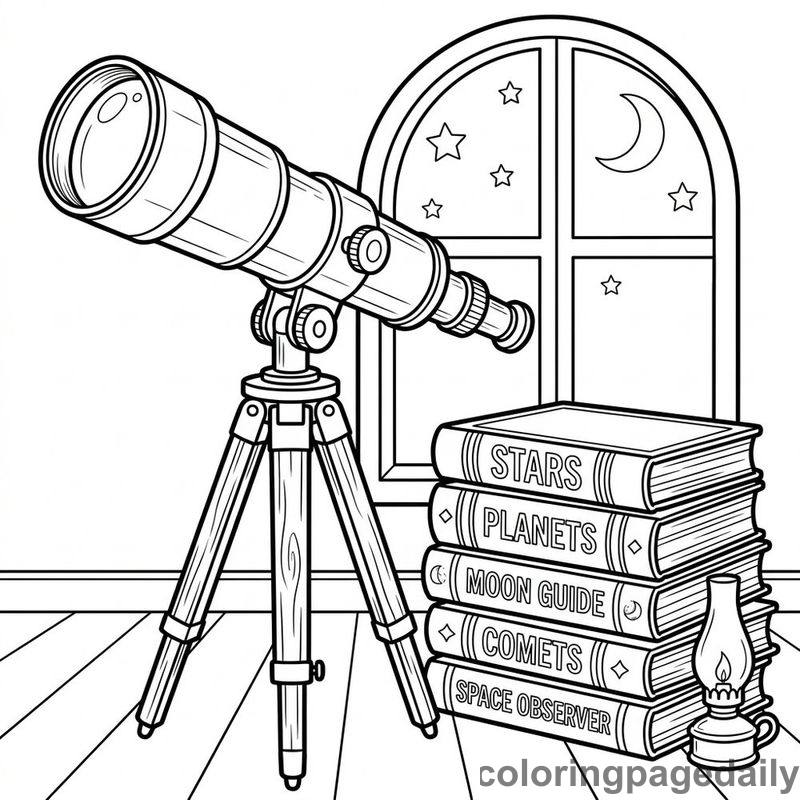
Finally, for those who still want to look up, we’ve added a Vintage Astronomy Telescope Observation page. Surrounded by thick, ancient astronomy books, this classic telescope bridges the gap between historical observation and modern space exploration. It's a fantastic page for combining rich wood tones with gleaming brass colors.
All of these new pages are now live in the STEM & Science Discoveries gallery. Grab your crayons, colored pencils, and markers, and get ready to color your way through the fascinating world of physics and engineering!
This article is part of STEM & Science Discoveries — browse all 19 coloring pages
