Welcome back to our Mythical Creature Hobbies collection! While our adorable magical friends are always the stars of the show, the enchanting environments around them offer a fantastic opportunity for young artists to practice new coloring techniques. Whether your little ones are working with crayons, colored pencils, or markers, here are some helpful tips for parents and teachers to help children bring natural elements to life in these magical scenes.
When coloring underwater scenes, like our adorable baby kraken tending to its kelp garden, encourage children to think about how water changes colors. Instead of relying on a single shade of blue, try layering light blues, aquas, and deep navy to create a sense of oceanic depth. A great trick is to color the background water lightly and use darker, more vibrant greens and purples for the magical kelp up front. Don't forget to use a bright, warm color for the kraken's sun hat to make it pop against the cool ocean tones!
Capturing the look of wind and soft textures can be a fun artistic challenge. In pages featuring our pebble golem blowing dandelion seeds, talk to your students or children about the power of contrast. If they want the dandelion fluff to look white and airy, they can lightly shade the sky behind it with a soft blue, lavender, or sunset pink. Using gentle, sweeping pencil strokes in one uniform direction in the background can also give the illusion of a gentle breeze carrying the seeds away.
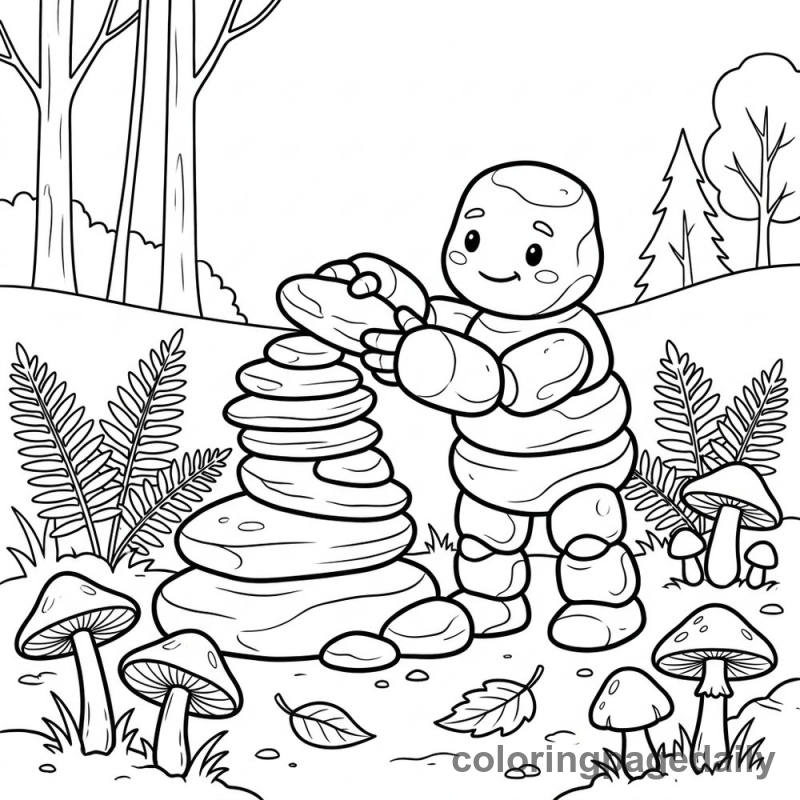
Mythical creatures feel even more magical when placed in a grounded, realistic setting. For scenes involving rocks, stones, and dirt, encourage kids to mix their earthy colors. A stone doesn't have to be just gray! By blending bits of brown, mossy green, and even subtle hints of blue or purple into the pebbles, the rocks will look much more natural and three-dimensional. This blending technique works perfectly for our pebble golem building a trail marker among the blooming forest mushrooms.
Our young griffin weaving a dreamcatcher offers wonderful fine motor practice for detailed coloring. To make feathers look realistic, kids can use short, quick strokes with a sharp colored pencil, flicking outward from the center shaft of the feather. For the woven vines, using two different shades of brown or green intertwined can highlight the overlapping twists, shadows, and knots of the dreamcatcher.
By focusing on the environments and natural materials, children can elevate their coloring pages from simple character portraits to fully realized, vibrant worlds. Grab your favorite coloring supplies and enjoy the magic!
This article is part of Mythical Creature Hobbies — browse all 15 coloring pages
