Spring is a season of incredible transformation, making it the perfect time to spark a child's curiosity about the natural world. Our "Magical Spring Gardens" coloring collection invites kids to step into a world of imagination where spring flowers bloom from vintage cameras and rain boots turn into cozy homes. But did you know that these whimsical scenes are also packed with real-world science?
Here are some fascinating educational facts you can share with your children or students as they bring these magical pages to life!
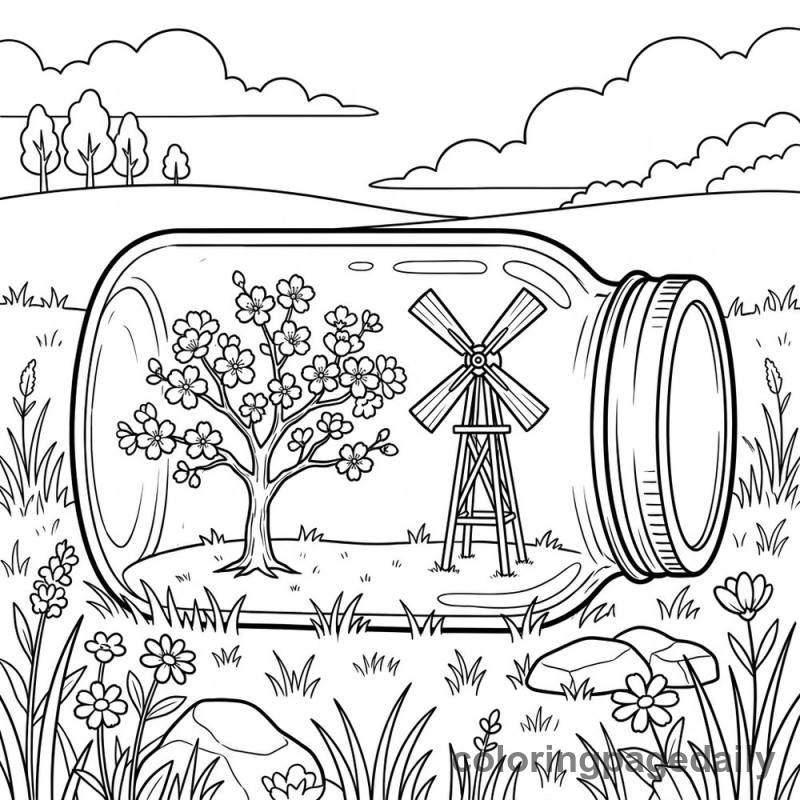
In this enchanting scene, a giant mason jar acts as a protective terrarium for a blooming cherry blossom tree. Terrariums are more than just beautiful—they are functioning miniature ecosystems!
Educational Fact: A closed terrarium creates its own mini water cycle. The plants release moisture through a process called transpiration. This moisture evaporates, condenses on the glass walls, and then drips back down into the soil like rain (precipitation). It’s a perfect, self-sustaining loop that teaches kids exactly how rain works on a global scale.
What could be cozier than a tiny home tucked inside a giant rain boot? Spring showers are famous for bringing May flowers, and rain boots are essential gear for puddle-jumping.
Educational Fact: While many modern boots are made from synthetic materials, traditional rubber actually comes from trees! The Rubber Tree (Hevea brasiliensis) produces a milky white sap called latex. When the bark is gently tapped, this sap is collected and processed into the bouncy, waterproof rubber we use to keep our feet dry.
This magical paint palette swaps out watercolors for real, blooming spring flowers. It's a wonderful visual representation of how colorful the natural world can be.
Educational Fact: Plants get their brilliant colors from natural chemical compounds called pigments. Chlorophyll gives plants their green color and helps them make food from sunlight. Carotenoids create the bright yellows and oranges seen in spring daffodils, while anthocyanins are responsible for the stunning reds, purples, and blues found in tulips and cherry blossoms.
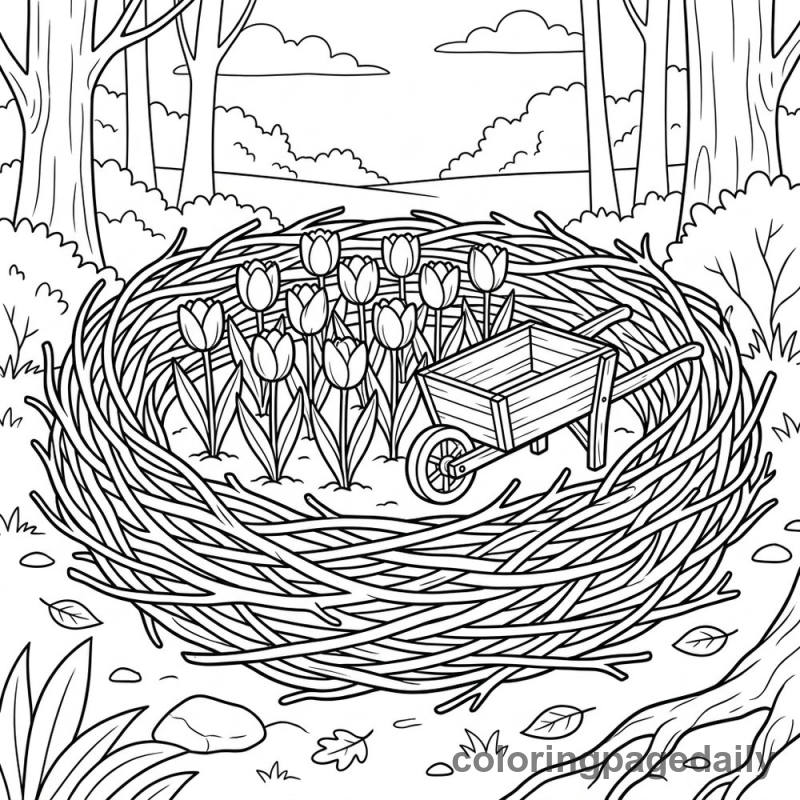
In this coloring page, a giant woven bird nest has been magically repurposed as a cozy spring garden.
Educational Fact: Birds are some of nature's greatest engineers! Without using any tools, they weave complex structures using twigs, grass, and mud. Some birds, like hummingbirds, even use spider silk to bind their nests together. The spider silk is incredibly strong and stretchy, allowing the nest to safely expand as the baby birds grow bigger!
Combining art with education helps reinforce new concepts in a child's mind. The next time your little ones sit down with their crayons and our Magical Spring Gardens collection, ask them questions about what they are coloring. How does the water cycle work? Where do colors come from?
Happy coloring, and happy learning!
This article is part of Magical Spring Gardens — browse all 15 coloring pages
