Our Magical Scenery & Hidden Worlds Vol. 2 collection is expanding! We are thrilled to introduce a fresh batch of coloring pages that shrink us down to the size of a bug, exploring miniature homes and enchanted environments built into massive, everyday objects.
This update offers a fantastic opportunity for children and students to experiment with scale, contrast, and mixed materials. Here is a look at some of the newest pages in the collection, along with guided tips to help young artists bring these giant objects to life.
One of our favorite new additions is the Magical Lightbulb Terrarium. Coloring glass can be a fun and rewarding challenge for young artists!
Coloring Tip: Encourage your kids to leave a few small, curved areas of the lightbulb completely uncolored to create the illusion of a shiny glass reflection. Using light, sweeping strokes of pale blue or gray around the outer edges of the bulb will make the miniature blooming forest inside truly pop off the page.
We’ve also added some beautifully retro items to the collection, such as the Magical Rotary Telephone House. This specific page is a perfect teaching tool for the concept of color contrast.
Coloring Tip: Try using deep, solid colors for the heavy, manufactured base of the telephone—think rich blacks, deep reds, or dark forest greens. Contrast these dark, solid tones with bright, sunny yellows and soft pinks for the blooming spring daffodils. This exercise helps children understand how dark backgrounds can make bright colors look even more vibrant and lively.
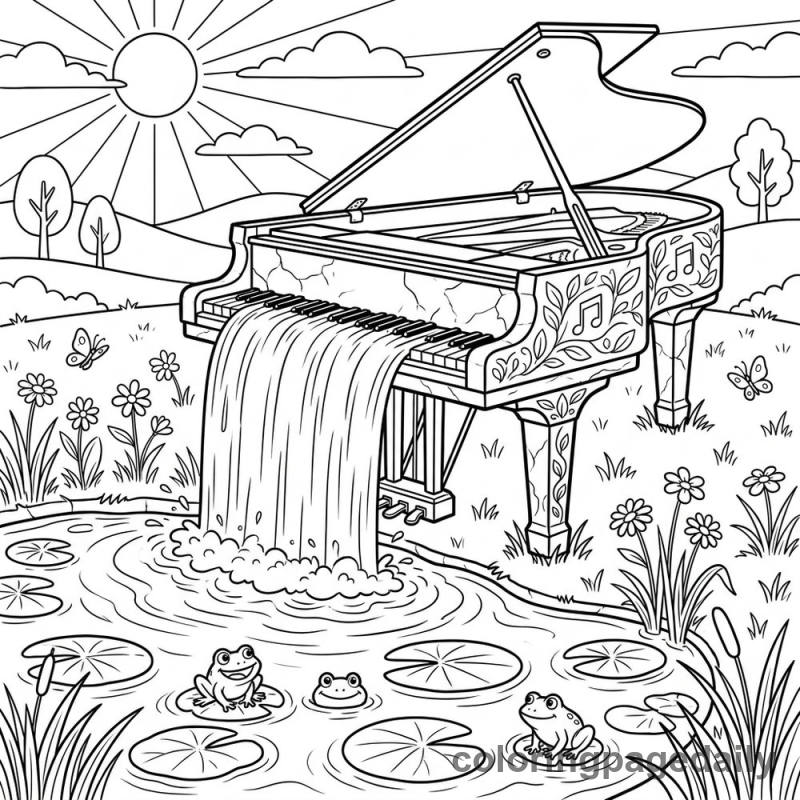
For a touch of musical enchantment, the Magical Grand Piano Waterfall page introduces moving water cascading over piano keys.
Coloring Tip: To make the waterfall look like it's really splashing and flowing, kids can use a technique called layering. Start with a light blue base over the water, add medium blue streaks following the downward flow, and use a dark blue in the shadows directly underneath the lily pads to create depth. Leaving white streaks near the bottom of the waterfall can mimic splashing foam!
Finally, the Magical Forest Kaleidoscope introduces geometric shapes interacting with organic, natural environments.
Coloring Tip: This page is an excellent tool for practicing pattern work. Kids can alternate warm colors (like reds, oranges, and yellows) and cool colors (like blues and purples) within the projected geometric light shapes. This creates a glowing, magical effect against the soft greens of the giant spring ferns.
These new pages are designed to spark curiosity and fine-tune motor skills. When everyday objects become giant magical landscapes, it encourages children to look at the world around them from a completely new perspective. Grab your favorite colored pencils, markers, or crayons, and dive into this latest update!
This article is part of Magical Scenery & Hidden Worlds Vol. 2 — browse all 12 coloring pages
