Welcome to another creative journey with our "Animals with Hobbies" collection! While broad strokes and simple coloring techniques are wonderful for beginners, older children and detail-oriented artists often crave a bit more complexity. Coloring intricate designs—like woven hammocks, patterned socks, or detailed clothing—is a fantastic way to develop fine motor skills, patience, and visual planning.
Here are our top tips for tackling the tiny details and fun patterns in our hobbyist animal pages!
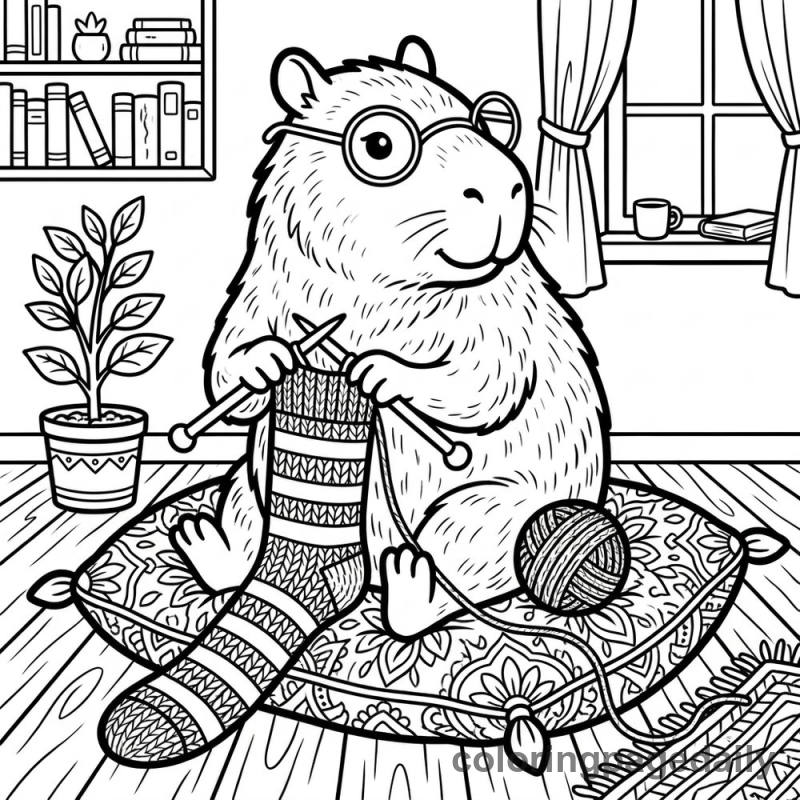
When approaching a page with distinct geometric patterns, like our knitting capybara's long striped sock, encourage kids to plan their color palette ahead of time. Using complementary colors (such as blue and orange, or purple and yellow) will make the stripes stand out brilliantly. Because the capybara is typically a neutral brown, a highly vibrant, contrasting sock will immediately draw the viewer's eye to the animal's favorite hobby.
For natural patterns, like the intricate lines on the conch shells our clever octopus is organizing, fine-tip markers are a young artist's best friend. Have your child trace the spiral grooves of the shells with a dark, fine-tip pen before lightly shading the body of the shell with a colored pencil. This technique ensures the beautiful spiral pattern doesn't get lost under heavy layers of crayon wax.
Coloring woven objects can sometimes feel overwhelming because of all the crossing lines. When coloring the axolotl's seagrass hammock, teach your students or children the "multi-tone" technique. Instead of coloring the entire hammock one flat shade of green, set out three different colored pencils: a light yellow-green, a medium green, and a dark forest green. By coloring individual intersecting strands with different shades, the weaving instantly looks layered and three-dimensional.
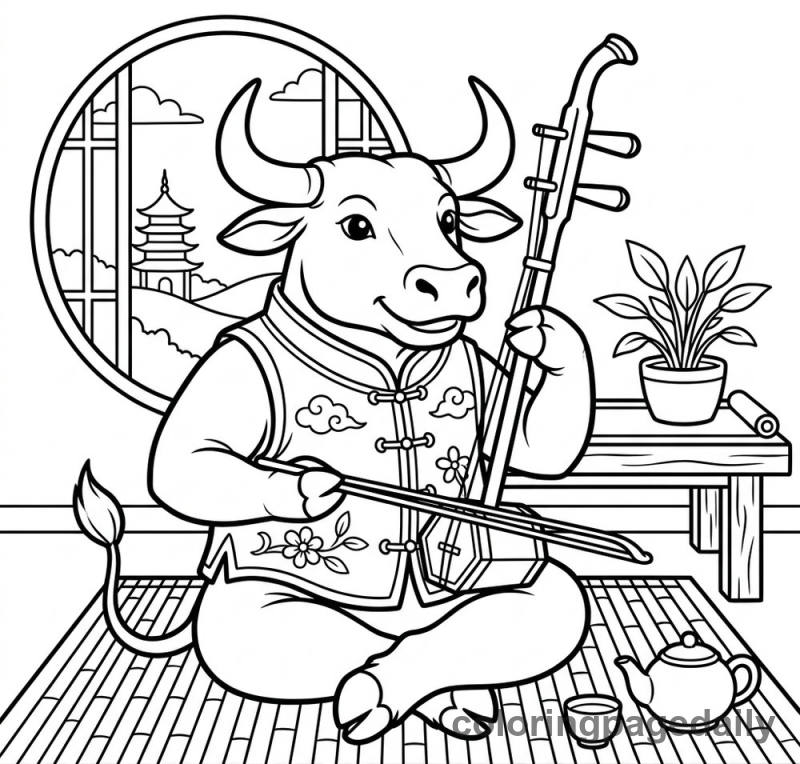
Finally, when dealing with highly detailed clothing—like the beautiful embroidered vest on our Erhu-playing Zodiac Ox—don't be afraid to mix media! Gel pens are perfect for adding metallic gold, silver, or neon accents to the tiny embroidered threads. If coloring every single tiny shape is too frustrating for younger kids, show them how to do a light "wash" of a single color over the vest first, and then pick out just a few key details to highlight with a bright, solid pen.
Grab your fine-tip markers, sharpen those colored pencils, and let's bring these detailed animal hobbies to life!
This article is part of Animals with Hobbies — browse all 28 coloring pages
